
416 Blair Ave,
Reading, PA 19601

How to Use AI to Save Time and Grow Your Business (Without a Tech Team)
Save time, streamline ops, and grow without a tech team.
7:11
Are you still wearing way too many hats, from founder and marketer to customer service agent and administrative assistant? Time is your ultimate currency.
AI has moved beyond enterprise technology and is now more accessible than ever. According to the U.S. Chamber of Commerce, 58% of small businesses now report using generative AI, up from 40% in 2024 and more than double the 23% reported in 2023. Low-cost tools are currently being built specifically for small businesses and small teams.
Implementing AI isn't just about replacing humans, and in most cases, it's not about replacing employees at all. AI is now a force multiplier for small and mid-sized businesses globally. It allows you to save hours while building a stronger and more profitable business.
This blog will outline a few ideas on how you can leverage AI to save time and help your business grow. We'll cover:
- Section 1: Streamlining operations and daily tasks
- Section 2: Improving your marketing and sales to drive growth
- Section 3: Smart hiring, HR, and talent management
- Section 4: Quality control and brand voice
- Section 5: A four-step implementation roadmap for small businesses
Streamlining Operations & Daily Tasks (Saving Time)
As a business owner, I’ve found one of the best ways to streamline daily tasks and operations is to automate some of our administrative work. Using AI meeting assistants to generate instant meeting notes, action items, and task assignments is a great way to save time and create efficiency. It also gives you the ability to speed up inbox management by routing conversations using technology and workflows. A great example of this is Google Workspace Studio, which allows you to create automations directly within the Google Workspace environment.
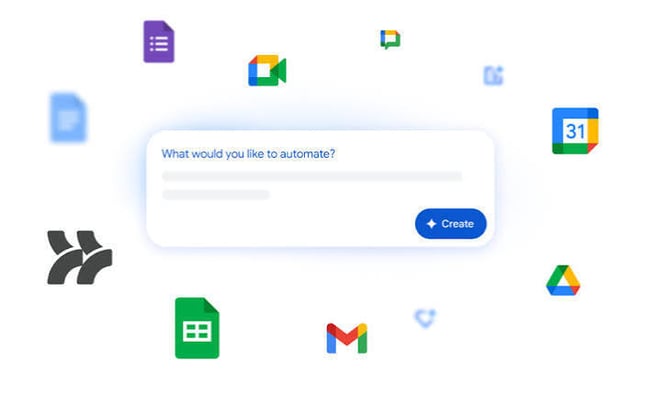
Financials and data management are often areas where I hear colleagues and contemporaries using AI. I'm not quite there yet in terms of my comfort level granting AI access to sensitive financial data, but I understand the appeal.  Many businesses are using it to streamline invoice processing, expense categorization, and receipt tracking through accounting tools like QuickBooks AI and Zoho, for example.
Workflow automation is also heavily utilized by small and mid-sized businesses. There are now several different platforms that allow you to connect your existing tools and tech stack without needing to be a programmer. In the past, people would use third-party integration tools such as Zapier to connect their software. Now, you have additional tools like Make that can automatically transfer customer data, sync calendars, and trigger follow-up alerts to create incredible efficiencies.
Drive Growth with Digital Marketing & Sales
Growth is always on the minds of small business owners, and now more than ever, they are leveraging AI to handle digital marketing and sales. Before you dive in, I highly recommend having a clear strategy or plan in place before using any AI tool for marketing and sales.
AI will help you create high-speed content, improve search visibility, and offer 24/7 customer engagement and lead capturing. You can even use AI CRM features to lead-score, personalize email campaigns, and identify the optimum time to reach out to potential customers.
The issue with just using AI to do these things is that it doesn't intuitively tell you what high-value content needs to be created to resonate with your target audience. That is where your strategy comes in! You will also encounter AI tools that hallucinate and provide misinformation around the keywords you should be optimizing for, which is exactly why you need a human involved in the process.
Maintaining your brand voice is also essential. Keeping your value proposition, your niche, and your target audience top of mind while pursuing these new markets for sales growth and carefully choosing where you allocate your marketing time and attention is critical.
Smart Hiring, HR, and Talent Management
AI can help you accelerate recruitment, streamline your onboarding and internal training, and optimize workforce management.
AI is great for helping you write targeted job descriptions in seconds. You can also use AI resume screening to filter quality candidates faster so that you can reach out to the most legitimate prospects earlier in the process. One of the applications I like most is using AI to create internal knowledge bases for new hires and generating standard operating procedures (SOPs).
Many of us use project management tools like Asana and ClickUp. Now, these tools have AI technology built-in to help schedule tasks, track completion, and manage team workloads to minimize burnout. Some of these tools even use conditional logic to work with AI, allocating tasks and updating your staff in real time.
Quality Control & Brand Voice: The "Human-in-the-Loop"
I believe you can successfully use AI for quality control, but it fundamentally requires a human to be involved in the process. In the agency and marketing space, this concept is known as the "human-in-the-loop."
Consider implementing the 80/20 rule of AI creation: treat AI as the first draft that gets you 80% of the way there, and leave the critical remaining 20% to a human for editing, injecting personal storytelling, applying local context, etc.
Knowing what is off-limits is equally important. You must recognize where AI adds the most value (for example, with drafts and brainstorming) versus where genuine human connection is mandatory in your business.

4-Step AI Implementation Roadmap for Small Businesses
There are countless AI tools available, and it feels like the "latest and greatest" tool hits the market every single day. Before I get into the four steps, I highly advise you to take the time to understand what you already have in your existing tech stack. For example, explore all the AI capabilities you might already have access to within Microsoft 365 or Google Workspace. Figure out what is available in your current monthly subscriptions before you start spending incremental dollars on new tools.
That being said, below are my top four steps:
- Conduct a time audit: Identify two to three repetitive tasks consuming more than 5 hours of your week.
- Start small with high-impact tools: Test one tool at a time. For example, try adopting meeting summaries before trying to automate complex sales workflows.
- Set guardrails: Put basic data security policies in place before rolling out tools across the entire team. For example, you likely do not want everyone having full access to your QuickBooks Online AI information.
- Measure ROI and iterate: Track your hours saved and monitor the impact on lead generation or response times, then refine your approach.
Key Takeaway
I don't believe that AI will replace small business owners or key decision-makers within small and mid-sized businesses. I do believe that small business owners and decision-makers who adopt AI will outperform those who do not.
Don't know where to start? Download our AI strategy checklist!
Subscribe to our Blog
Recent Posts
Categories
- Marketing Strategy (126)
- web design (83)
- digital marketing (73)
- Search Engine Optimization (SEO) (62)
- Paid Search (PPC) (59)
- Digital Analytics (55)
- seo (51)
- Google Analytics (50)
- News & Events (48)
- Social Media Marketing & Management (47)
- Content Marketing (45)
- PPC (43)
- Ecommerce & Retail Marketing (39)
- Business to Business Marketing (34)
- Website design (34)
- Mobile marketing (33)
- local seo (32)
- eCommerce (31)
- Inbound marketing (29)
- B2B marketing (27)
- social media (26)
- email marketing (25)
- social media marketing (25)
- website redesign (25)
- B2B (24)
- Financial Services (23)
- website development (23)
- Pay Per Click (20)
- SEO strategy (20)
- B2B marketing agency (19)
- marketing (19)
- web development (19)
- Google AdWords (17)
- marketing automation (17)
- press release (16)
- Social Media Management (15)
- ecommerce marketing (15)
- lead generation (15)
- social media strategy (15)
- Web Design Strategy/Website Strategy (14)
- content (14)
- web design services for small business (14)
- Web Design Trends (13)
- financial services marketing (13)
- sales (13)
- Digital Branding (12)
- Healthcare & Wellness (12)
- Social Strategy (12)
- Video Marketing (12)
- branding (12)
- search engine optimization (12)
- Analytics (11)
- Artificial intelligence (AI) (11)
- Retail Marketing (11)
- SEM (11)
- digital advertising (11)
- increase brand awareness (11)
- internet marketing (11)
- online shopping (11)
- responsive web design (11)
- web analytics (11)
- Healthcare Marketing (10)
- Home Services (10)
- Lead Generation Marketing (10)
- SEO Services (10)
- financial advisors marketing (10)
- local listing management (10)
- Bank Marketing (9)
- CRM (9)
- Content Planning (9)
- Google Ads (9)
- Inbound Marketing Strategies (9)
- PPC Marketing (9)
- WordPress (9)
- content development (9)
- content strategy (9)
- redesign website (9)
- web designer (9)
- 2024 Planning (8)
- B2C Marketing (8)
- Retail Sales (8)
- Shopify (8)
- Social Media Metrics (8)
- Web Security (8)
- b2b sales (8)
- financial marketing (8)
- project management (8)
- social marketing (8)
- social media analytics (8)
- strategic marketing (8)
- website (8)
- 2025 Planning (7)
- AdWords (7)
- Bing Ads (7)
- Mobile design (7)
- ROI (7)
- Sales Strategy (7)
- brand identity (7)
- business strategy (7)
- content optimization (7)
- home services marketing (7)
- link building (7)
- mobile (7)
- mobile website (7)
- ppc advertising (7)
- social tips (7)
- AI Content (6)
- CMS (6)
- Customer Persona (6)
- Link Earning (6)
- Online Sales (6)
- SEO Agency (6)
- SEO measurement (6)
- Search Engine Marketing (6)
- account-based marketing (6)
- brand development (6)
- digital marketing agency (6)
- digital marketing strategy (6)
- hubspot cms (6)
- keyword research (6)
- measurement (6)
- news and events (6)
- shopify website (6)
- shopping ads (6)
- small business (6)
- social analytics (6)
- strategy (6)
- Paid Search (5)
- Plumbing Marketing (5)
- brand guidelines (5)
- business to business (5)
- customer relationship management (5)
- customer relationship management tools (5)
- google shopping (5)
- hubspot agency (5)
- inbound marketing strategy (5)
- lead generation website (5)
- marketing insights (5)
- marketing tips (5)
- measuring SEO (5)
- paid search campaigns (5)
- ppc management (5)
- sales CRM (5)
- user experience (5)
- video (5)
- web developer (5)
- 2026 planning (4)
- Artificial Intelligence (4)
- CMS Hub (4)
- Call Tracking (4)
- Facebook (4)
- Improve productivity (4)
- Inbound Sales Strategy (4)
- Insurance Marketing (4)
- KPIs (4)
- Local Listings (4)
- Logo Design (4)
- Non-Profit Marketing (4)
- Organic Search (4)
- Outbound Sales Strategy (4)
- SERPS (4)
- Social media updates (4)
- Uncategorized (4)
- Wealth Management marketing (4)
- aeo (4)
- compliance (4)
- conversions (4)
- creative design (4)
- credit union (4)
- customer relationship system (4)
- dabrian marketing (4)
- data (4)
- ecommerce SEO (4)
- email (4)
- home improvement (4)
- leads (4)
- local search (4)
- manufacturing marketing (4)
- mobile advertising (4)
- news (4)
- optimization (4)
- paid online advertising (4)
- sales funnel (4)
- sales pipeline (4)
- security (4)
- smart goals (4)
- social advertising (4)
- social media tips (4)
- tag management (4)
- trends (4)
- 2023 (3)
- AI SEO (3)
- Adobe Analytics (3)
- Amazon Advertising (3)
- Automotive Marketing (3)
- B2B Content (3)
- B2B Search Marketing (3)
- B2B eCommerce (3)
- B2C (3)
- Continuous Website Improvement (3)
- Google My Business (3)
- Growth Driven Design (3)
- HVAC (3)
- Home Improvement Marketing (3)
- Hospital Marketing (3)
- Lawn Care Marketing (3)
- LinkedIn (3)
- Marketing Budgeting (3)
- Measurement Planning (3)
- Multivariate Testing (3)
- Online Business (3)
- Partnership (3)
- Personas (3)
- Product Inventory (3)
- SEO Reporting (3)
- SOCIAL ECOMMERCE (3)
- Sales Prospecting (3)
- Sales and Marketing Alignment (3)
- Speed-to-Lead (3)
- Time Management (3)
- Twitter (3)
- UX Design (3)
- UX research (3)
- adCenter (3)
- advertising (3)
- api (3)
- attribution modeling (3)
- bank advertising (3)
- big data (3)
- construction marketing (3)
- consumer services (3)
- customer (3)
- data privacy (3)
- digital content (3)
- digital marketing measurement (3)
- digital marketing services (3)
- email for ecommerce (3)
- facebook ads (3)
- google partners connect (3)
- graphic design (3)
- hubspot (3)
- hubspot crm (3)
- hubspot sales (3)
- instagram (3)
- marketing metrics (3)
- minority owned businesses (3)
- monitor (3)
- omnichannel Marketing (3)
- on-page seo (3)
- online reputation management (3)
- online store (3)
- paid search advertising (3)
- pay per click advertising campaigns (3)
- plumbing (3)
- ppc account management (3)
- reputation management (3)
- sales enablement (3)
- tips (3)
- voice search (3)
- #agencylife (2)
- 2022 (2)
- 2023 planning (2)
- 2024 (2)
- ABM (2)
- B2B growth (2)
- BigCommerce (2)
- Business growth opportunities (2)
- COVID (2)
- CRM alignment (2)
- Conversion Tracking (2)
- Covid-19 (2)
- Facebook Tips (2)
- Facebook business (2)
- GDPR (2)
- Gmail tips (2)
- Google Business Profile (2)
- Google event (2)
- Home Improvement Trends (2)
- LinkedIn Ads (2)
- Local SEO Strategy (2)
- Logistics (2)
- Minority Business Enterprise (2)
- Online Advertising (2)
- Product Data Feed (2)
- Qualitative Data (2)
- Restaurant Marketing (2)
- SBE (2)
- Twitter Tips (2)
- UX (2)
- Video SEO (2)
- Yelp (2)
- ad copy (2)
- agency transparency (2)
- algorithm management (2)
- automated bidding (2)
- budget (2)
- business growth (2)
- certification (2)
- client appreciation (2)
- clients (2)
- cloud (2)
- communication (2)
- content promotion (2)
- copywriting (2)
- data driven culture (2)
- data driven marketing (2)
- data mining (2)
- design (2)
- digital avertising (2)
- digital transformation (2)
- digital vs traditional (2)
- education (2)
- email analytics (2)
- email marketing measurement (2)
- enhanced campaigns (2)
- guide (2)
- healthcare marketing agency (2)
- hootsuite (2)
- hosting services (2)
- implementing (2)
- inbound leads (2)
- inbound success plan (2)
- industries (2)
- industry solutions (2)
- insurance and trust (2)
- interactive content (2)
- internet (2)
- landing (2)
- landing page (2)
- lead generation tools (2)
- lehigh valley (2)
- local business (2)
- local event (2)
- local listing (2)
- logo types (2)
- marketing tools (2)
- measure (2)
- medical marketing (2)
- mobile analytics (2)
- mobile app (2)
- mobile optimization (2)
- mobile seo (2)
- multichannel (2)
- multichannel marketing (2)
- native ads (2)
- news release (2)
- non-profit (2)
- nonprofit marketing (2)
- one page web design (2)
- operations process (2)
- outbound marketing (2)
- phone calls (2)
- platform (2)
- rackspace (2)
- reading pa (2)
- remarketing (2)
- retargeting (2)
- sales plan (2)
- segmentation (2)
- self marketing (2)
- social (2)
- social commerce (2)
- social media agency (2)
- staffing and recruitment (2)
- successful (2)
- target audience (2)
- tariffs (2)
- technical seo (2)
- testing (2)
- tracking (2)
- universal analytics (2)
- website optimization (2)
- work platforms (2)
- workflows (2)
- 1 page sales plan (1)
- 2021 (1)
- 2022 planning (1)
- 3pl (1)
- 5 basic principles (1)
- AAF (1)
- AAF-GLV (1)
- ADA Compliance (1)
- AI (1)
- Alignment (1)
- American Advertising Federation (1)
- American Advertising Federation Greater Lehigh Val (1)
- Answer Engine Optimization (1)
- AuthorRank (1)
- B2B Marketing Strategy (1)
- Backlinks (1)
- Bank Lead Generation (1)
- Brightlocal (1)
- Budget Planning (1)
- Business Operations (1)
- ChatGPT Marketing (1)
- Cheap SEO Services (1)
- Cloud U (1)
- Cold Calls (1)
- Cold Email (1)
- Cold Outreach (1)
- Contractor Lead Generation (1)
- Copywriter (1)
- Customer Acquisition (1)
- Digital Health Marketing (1)
- Display Advertising (1)
- Dynamic Text (1)
- Ecommerce Strategy (1)
- Employee Advocacy (1)
- Feed Optimization (1)
- Financial SEO (1)
- First Party Data (1)
- Fractional Marketing (1)
- GK Elite (1)
- General (1)
- Generative Engine Optimization (1)
- Google AI Mode for Healthcare (1)
- Google Ads 2026 (1)
- Google Guidelines (1)
- Google Manufacturer Center (1)
- Google Marketing Live (1)
- Google Rankbrain (1)
- Google Rankings (1)
- Google reviews (1)
- Google+ (1)
- Growth Strategy (1)
- HIPAA Compliance (1)
- HIPAA Compliant Marketing (1)
- HIPPA Compliance (1)
- HVAC & Plumbing Strategy (1)
- Healthcare AI Search (1)
- Healthcare Advertising (1)
- Healthcare Automation (1)
- Healthcare Strategy (1)
- Hospitality & Travel (1)
- Hubspot Onboarding (1)
- Hybrid Manufacturing (1)
- Independent Medical Practice (1)
- Independent Medical Practices (1)
- Independent Practice (1)
- Landscaping (1)
- Landscaping Marketing (1)
- Legal advice (1)
- Load-Time (1)
- MBE (1)
- MWBE (1)
- Maintenance Membership (1)
- Manufacturing (1)
- Medial PPC (1)
- Medical Practice Growth (1)
- Medical Practice Marketing (1)
- Medical Practice SEO (1)
- Microsoft adCenter (1)
- Millennials (1)
- ODYSSEY Battery (1)
- Operational Efficiency (1)
- Patient Reactivation (1)
- Pest Control Marketing (1)
- Pipedrive (1)
- Practice Growth (1)
- Practice Management (1)
- Programmatic Advertising (1)
- Project Management Systems (1)
- Q4 Healthcare Marketing (1)
- Quality Score (1)
- ROAS (1)
- Recurring Revenue (1)
- Regulation S-P (1)
- SEC Mandate (1)
- SEO strategy in 2015 (1)
- Sales Calls (1)
- Shopify partner (1)
- Shoulder Season (1)
- Soc (1)
- Specialty Practice Marketing (1)
- Toptrends (1)
- URL Structure (1)
- URL tagging (1)
- User Behavior (1)
- VeteransDay (1)
- Wealth Management (1)
- Woocommerce (1)
- accessibilitiy (1)
- accessibility (1)
- accounts (1)
- administrative (1)
- advisor efficiency (1)
- align (1)
- analytics framework (1)
- artisanal cheese (1)
- attribution (1)
- audience segmentation (1)
- authorship (1)
- auto dealers (1)
- b2b buying habits (1)
- bidding strategy (1)
- blog (1)
- bounce rate (1)
- brand culture (1)
- branded search (1)
- bug (1)
- business (1)
- business development (1)
- business plan (1)
- business systems (1)
- business tech (1)
- buyer's journey (1)
- buying process (1)
- campaign tagging (1)
- campaign tracking (1)
- candidate marketing (1)
- capturing (1)
- cause marketing (1)
- citations (1)
- click-and-mortar (1)
- column hack (1)
- combination marks (1)
- competitor analysis (1)
- competitor research (1)
- content hub (1)
- content syndication (1)
- conversion (1)
- cost data (1)
- cpa (1)
- cpc (1)
- crowdsourced marketing (1)
- crowdsourcing (1)
- customer journey (1)
- customer segments (1)
- cyber monday (1)
- daa symposium (1)
- data security (1)
- dental marketing (1)
- desktop design (1)
- don draper (1)
- downtown improvement district (1)
- efforts (1)
- election (1)
- email campaigns (1)
- email design (1)
- email guidelines (1)
- email organizing tips (1)
- emblems (1)
- emergency search (1)
- engagement (1)
- enterprise search (1)
- event (1)
- event sponsorship (1)
- exact (1)
- expansion (1)
- experiments (1)
- free website (1)
- ga (1)
- geo (1)
- gmail tricks (1)
- google authorship (1)
- greater lehigh valley chamber of commerce (1)
- growth strategies (1)
- heartbleed (1)
- hiring (1)
- hubspot content hub (1)
- hubspot solutions partner (1)
- icons (1)
- increase (1)
- industrial manufacturing (1)
- infographic (1)
- integrated marketing (1)
- integration (1)
- inventory file (1)
- kerning (1)
- keyword match types (1)
- keywords (1)
- law firm (1)
- law firm marketing (1)
- law practice (1)
- legal services (1)
- letter marks (1)
- life science (1)
- local service ads (1)
- logo creation (1)
- logos (1)
- mad men (1)
- maintenance (1)
- marketing attribution (1)
- marketing event (1)
- marketing for law (1)
- marketing hub (1)
- medical practices (1)
- meetings (1)
- member insights (1)
- metrics (1)
- mobile banking (1)
- multitasking (1)
- myth (1)
- new (1)
- new hire (1)
- new year's resolution (1)
- newhire (1)
- nonprofit (1)
- office (1)
- one page website (1)
- online marketing (1)
- opportunity house (1)
- outdated (1)
- pages (1)
- parallax scrolling (1)
- partner (1)
- personalization (1)
- pharma marketing (1)
- pharmaceutical (1)
- pitfalls (1)
- pivot tables (1)
- predictive marketing (1)
- privacy (1)
- problem planning (1)
- product feed (1)
- productivity (1)
- project manager (1)
- project mgmt system (1)
- projects (1)
- prospects (1)
- quality (1)
- rank higher (1)
- recruiting (1)
- regulated (1)
- relations (1)
- remote workspace (1)
- return on ad spend (1)
- reviews (1)
- rich snippets (1)
- robo advisors (1)
- sales automation (1)
- sales enablement tools (1)
- sales goals (1)
- say cheese reopening (1)
- schema markup (1)
- search engines (1)
- search intent (1)
- search rankings (1)
- search visibility (1)
- seocial (1)
- sequences (1)
- single page website (1)
- snap map (1)
- snapchat (1)
- snapchat business (1)
- snapchat tips (1)
- social media marketing agencies (1)
- social media tools (1)
- social monitoring (1)
- socialytics (1)
- storytelling (1)
- superiors (1)
- supply chain (1)
- symbols (1)
- tag management solution (1)
- tagline development (1)
- task management (1)
- team (1)
- thankyouforyourservice (1)
- time blocking (1)
- traditional marketing (1)
- tutorial (1)
- twitter business (1)
- user experience research (1)
- video production (1)
- video strategy (1)
- virtual reality (1)
- visibility (1)
- volunteerism (1)
- webinar (1)
- website updates (1)
- white paper (1)
- word marks (1)
- work from home (1)
- work tools (1)
- yahoo mail (1)
Archives
- April 2025 (8)
- July 2025 (8)
- December 2025 (8)
- July 2026 (8)
- August 2026 (8)
- September 2012 (7)
- May 2026 (7)
- August 2015 (6)
- February 2016 (6)
- July 2016 (6)
- January 2017 (6)
- May 2017 (6)
- June 2025 (6)
- October 2025 (6)
- June 2026 (6)
- May 2012 (5)
- April 2013 (5)
- May 2013 (5)
- June 2013 (5)
- July 2013 (5)
- July 2014 (5)
- October 2014 (5)
- January 2015 (5)
- July 2015 (5)
- October 2015 (5)
- May 2016 (5)
- June 2016 (5)
- October 2016 (5)
- March 2017 (5)
- April 2017 (5)
- April 2022 (5)
- May 2022 (5)
- June 2022 (5)
- November 2022 (5)
- February 2024 (5)
- July 2024 (5)
- October 2024 (5)
- March 2025 (5)
- September 2025 (5)
- November 2025 (5)
- March 2026 (5)
- April 2026 (5)
- June 2011 (4)
- April 2012 (4)
- June 2012 (4)
- July 2012 (4)
- August 2012 (4)
- October 2012 (4)
- November 2012 (4)
- January 2013 (4)
- February 2013 (4)
- September 2013 (4)
- October 2013 (4)
- March 2014 (4)
- June 2014 (4)
- August 2014 (4)
- September 2014 (4)
- November 2014 (4)
- March 2015 (4)
- May 2015 (4)
- June 2015 (4)
- January 2016 (4)
- August 2016 (4)
- September 2016 (4)
- November 2016 (4)
- December 2016 (4)
- June 2017 (4)
- March 2018 (4)
- December 2018 (4)
- May 2019 (4)
- January 2021 (4)
- April 2021 (4)
- October 2021 (4)
- December 2021 (4)
- January 2022 (4)
- February 2022 (4)
- March 2022 (4)
- July 2022 (4)
- September 2022 (4)
- February 2023 (4)
- July 2023 (4)
- August 2023 (4)
- October 2023 (4)
- December 2023 (4)
- April 2024 (4)
- May 2024 (4)
- August 2024 (4)
- February 2025 (4)
- January 2026 (4)
- February 2026 (4)
- September 2026 (4)
- January 2012 (3)
- December 2012 (3)
- March 2013 (3)
- August 2013 (3)
- November 2013 (3)
- February 2014 (3)
- April 2014 (3)
- May 2014 (3)
- December 2014 (3)
- February 2015 (3)
- April 2015 (3)
- September 2015 (3)
- November 2015 (3)
- December 2015 (3)
- March 2016 (3)
- April 2016 (3)
- August 2017 (3)
- October 2017 (3)
- October 2018 (3)
- January 2019 (3)
- February 2019 (3)
- October 2019 (3)
- February 2020 (3)
- August 2020 (3)
- October 2020 (3)
- November 2020 (3)
- December 2020 (3)
- March 2021 (3)
- July 2021 (3)
- August 2021 (3)
- September 2021 (3)
- August 2022 (3)
- December 2022 (3)
- January 2023 (3)
- March 2023 (3)
- April 2023 (3)
- May 2023 (3)
- January 2024 (3)
- March 2024 (3)
- June 2024 (3)
- September 2024 (3)
- November 2024 (3)
- January 2025 (3)
- August 2025 (3)
- July 2011 (2)
- September 2011 (2)
- November 2011 (2)
- February 2012 (2)
- December 2013 (2)
- February 2017 (2)
- July 2017 (2)
- September 2017 (2)
- May 2018 (2)
- August 2018 (2)
- September 2018 (2)
- March 2019 (2)
- December 2019 (2)
- March 2020 (2)
- July 2020 (2)
- February 2021 (2)
- May 2021 (2)
- June 2021 (2)
- October 2022 (2)
- June 2023 (2)
- September 2023 (2)
- November 2023 (2)
- May 2025 (2)
- March 2010 (1)
- May 2011 (1)
- August 2011 (1)
- October 2011 (1)
- December 2011 (1)
- March 2012 (1)
- January 2014 (1)
- January 2018 (1)
- April 2018 (1)
- June 2018 (1)
- July 2018 (1)
- November 2018 (1)
- April 2019 (1)
- July 2019 (1)
- November 2019 (1)
- January 2020 (1)
- September 2020 (1)
- November 2021 (1)
- December 2024 (1)