
416 Blair Ave,
Reading, PA 19601

Why Shared Lead Aggregators Fail Home Service Firms
Build a Proprietary, High-Margin Lead Engine
5:57
Renting your customer acquisition pipeline from third-party lead brokers is a dangerous long-term strategy.
When speaking with owners of mid-sized home service businesses, I consistently see a reliance on shared lead aggregators like Angi, Thumbtack, or HomeAdvisor. While these platforms promise quick volume during shoulder seasons, they actually create an operational "race to the bottom" that compresses margins and dilutes your brand.
To build a predictable, high-value enterprise, you must stop renting shared leads and start building a proprietary digital acquisition engine.
The Shared Lead Trap: Why the Math Fails Contractors
Many executives evaluate marketing using a single vanity metric: Cost Per Lead (CPL). Buying a shared lead for $45 looks cost-effective on paper, but it masks a hidden operational failure.
1. The Speed-to-Lead Breakdown
Aggregators sell the same customer lead to three to five competing contractors simultaneously. Data shows that 78% of homeowners hire the first contractor who responds. Responding within five minutes makes a firm 21 times more likely to qualify a lead compared to waiting 30 minutes.
When you buy a shared lead, your sales team enters a chaotic sprint against multiple competitors, drastically driving down your conversion rates before a field technician even sets foot on the property.
2. The True Cost Per Booked Job (CPBJ)
The metric that actually runs your business is Cost Per Booked Job. Consider the true unit economics:
- Shared Lead Scenario: A $50 shared lead with a 7% close rate costs $714 per booked job.
- Exclusive Channel Scenario: An $80 exclusive, high-intent lead with a 60% close rate costs $133 per booked job.
A lower upfront CPL often signals low-intent shoppers who are comparing prices across five vendors. Focusing strictly on CPL hides massive revenue leaks inside your intake pipeline.
3. Zero Brand Equity
When you buy from an aggregator, you are subsidizing their brand equity, not yours. The homeowner builds a relationship with the platform, while your firm is treated as an interchangeable vendor.
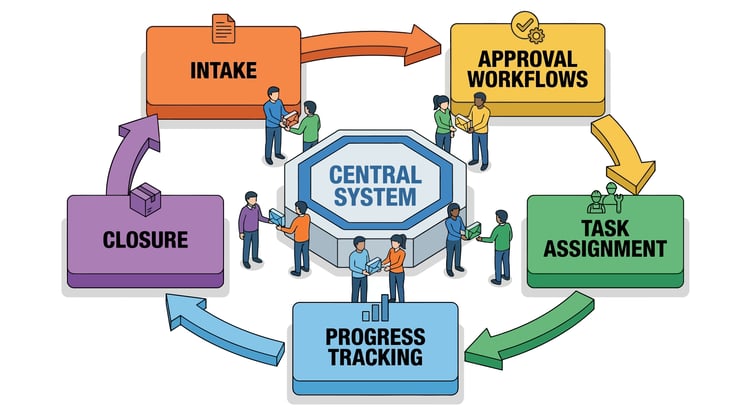
What to Build Instead: The Proprietary Engine
High-growth firms take control of their digital real estate by building four core acquisition pillars:
1. High-Intent Paid Search & Local Services Ads (LSAs)
Shift your ad spend to channels where you own the lead outcome. Google LSAs operate on a pay-per-booked-lead model for exclusive phone inquiries from homeowners in your specific service zip codes.
2. Answer Engine Optimization (AEO) Infrastructure
Modern homeowners use conversational AI tools like Google AI Overviews, ChatGPT, and Perplexity to solve urgent home repairs. Structuring your website's service pages with concise, expert Q&A data blocks ensures AI search models extract and cite your business as the direct recommendation.
3. FSM-Integrated 24/7 Intake
Connect your website intake directly to your Field Service Management software, such as ServiceTitan or Housecall Pro. Let high-intent leads self-book appointments directly onto your dispatch board, capturing the 40% of inquiries that arrive after hours.
4. Database Reactivation & Maintenance Memberships
Your existing customer list is your most profitable asset. Automated email and SMS campaigns selling annual maintenance plans keep your trucks rolling during slow months. It locks clients into your ecosystem before an emergency occurs.
Your 90-Day Transition Plan
Transitioning away from lead aggregators requires a structured approach:
- Month 1 (Audit): Calculate your true Cost Per Booked Job across all third-party lead aggregators over the past six months. Identify low-margin channels and establish baseline operational metrics.
- Month 2 (Infrastructure): Deploy AEO content structures, implement automated missed-call text-back tools, and synchronize online intake directly with your FSM dispatch calendar.
- Month 3 (Reallocation): Reduce spend on shared lead brokers by 25% increments, reallocating budget into direct search, local video proof, and automated review generation.
Build Equity in Your Own Pipeline
Relying on shared lead aggregators keeps your business dependent on third-party algorithms. Long-term profitability requires owning your lead infrastructure, tracking Cost Per Booked Job, and delivering immediate speed-to-lead.
If your current marketing approach feels like a black hole of unverified leads, you likely need a true marketing partner for ROI to build predictable growth.
Stop paying for shared leads.
Contact DaBrian Marketing today to audit your lead pipeline and build growth you can actually predict.

Frequently Asked Questions
Why are shared leads so much cheaper upfront?
Shared leads carry a lower initial purchase price because aggregators sell the exact same lead contact details to multiple competing contractors simultaneously. Once you factor in lower close rates and team follow-up labor, the true Cost Per Booked Job is often significantly higher than exclusive direct leads.
Can a mid-sized home service company eliminate third-party lead brokers?
Yes. High-performing firms replace shared platforms by combining Google LSAs, Answer Engine Optimization (AEO), automated review systems, and database reactivation campaigns to generate a consistent volume of exclusive inbound leads.
How does FSM integration reduce acquisition costs?
Integrating tools like ServiceTitan or Housecall Pro into your marketing channels allows prospects to view technician availability and self-book service calls in real time. This eliminates lead response delays and locks in high-intent buyers before they search for alternatives.
Subscribe to our Blog
Recent Posts
Categories
- Marketing Strategy (127)
- web design (83)
- digital marketing (73)
- Search Engine Optimization (SEO) (64)
- Paid Search (PPC) (60)
- Digital Analytics (55)
- seo (52)
- Google Analytics (50)
- News & Events (48)
- Social Media Marketing & Management (47)
- Content Marketing (45)
- PPC (44)
- Ecommerce & Retail Marketing (40)
- Business to Business Marketing (34)
- Website design (34)
- Mobile marketing (33)
- local seo (32)
- eCommerce (31)
- Inbound marketing (29)
- B2B marketing (27)
- social media (26)
- email marketing (25)
- social media marketing (25)
- website redesign (25)
- B2B (24)
- Financial Services (23)
- website development (23)
- Pay Per Click (20)
- SEO strategy (20)
- marketing (20)
- B2B marketing agency (19)
- web development (19)
- Google AdWords (17)
- marketing automation (17)
- Social Media Management (16)
- lead generation (16)
- press release (16)
- social media strategy (16)
- ecommerce marketing (15)
- financial services marketing (15)
- Web Design Strategy/Website Strategy (14)
- content (14)
- web design services for small business (14)
- Web Design Trends (13)
- sales (13)
- Analytics (12)
- Artificial intelligence (AI) (12)
- Digital Branding (12)
- Healthcare & Wellness (12)
- Social Strategy (12)
- Video Marketing (12)
- branding (12)
- search engine optimization (12)
- Retail Marketing (11)
- SEM (11)
- digital advertising (11)
- increase brand awareness (11)
- internet marketing (11)
- online shopping (11)
- responsive web design (11)
- web analytics (11)
- Google Ads (10)
- Healthcare Marketing (10)
- Home Services (10)
- Lead Generation Marketing (10)
- SEO Services (10)
- financial advisors marketing (10)
- local listing management (10)
- Bank Marketing (9)
- CRM (9)
- Content Planning (9)
- Inbound Marketing Strategies (9)
- PPC Marketing (9)
- WordPress (9)
- content development (9)
- content strategy (9)
- redesign website (9)
- web designer (9)
- 2024 Planning (8)
- B2C Marketing (8)
- ROI (8)
- Retail Sales (8)
- Shopify (8)
- Social Media Metrics (8)
- Web Security (8)
- b2b sales (8)
- financial marketing (8)
- project management (8)
- social marketing (8)
- social media analytics (8)
- strategic marketing (8)
- website (8)
- 2025 Planning (7)
- AdWords (7)
- Bing Ads (7)
- Mobile design (7)
- Sales Strategy (7)
- aeo (7)
- brand identity (7)
- business strategy (7)
- content optimization (7)
- home services marketing (7)
- link building (7)
- mobile (7)
- mobile website (7)
- ppc advertising (7)
- social analytics (7)
- social tips (7)
- AI Content (6)
- AI SEO (6)
- CMS (6)
- Customer Persona (6)
- Link Earning (6)
- Online Sales (6)
- Paid Search (6)
- SEO Agency (6)
- SEO measurement (6)
- Search Engine Marketing (6)
- account-based marketing (6)
- brand development (6)
- digital marketing agency (6)
- digital marketing strategy (6)
- google shopping (6)
- hubspot cms (6)
- keyword research (6)
- measurement (6)
- news and events (6)
- shopify website (6)
- shopping ads (6)
- small business (6)
- strategy (6)
- Marketing ROI (5)
- Plumbing Marketing (5)
- Wealth Management marketing (5)
- brand guidelines (5)
- business to business (5)
- customer relationship management (5)
- customer relationship management tools (5)
- hubspot agency (5)
- inbound marketing strategy (5)
- lead generation website (5)
- manufacturing marketing (5)
- marketing insights (5)
- marketing tips (5)
- measuring SEO (5)
- paid search campaigns (5)
- ppc management (5)
- sales CRM (5)
- user experience (5)
- video (5)
- web developer (5)
- 2026 planning (4)
- Artificial Intelligence (4)
- CMS Hub (4)
- Call Tracking (4)
- Facebook (4)
- HVAC (4)
- Improve productivity (4)
- Inbound Sales Strategy (4)
- Insurance Marketing (4)
- KPIs (4)
- Local Listings (4)
- Logo Design (4)
- Marketing Budgeting (4)
- Non-Profit Marketing (4)
- Organic Search (4)
- Outbound Sales Strategy (4)
- SERPS (4)
- Social media updates (4)
- Uncategorized (4)
- compliance (4)
- conversions (4)
- creative design (4)
- credit union (4)
- customer relationship system (4)
- dabrian marketing (4)
- data (4)
- ecommerce SEO (4)
- email (4)
- facebook ads (4)
- home improvement (4)
- leads (4)
- local search (4)
- mobile advertising (4)
- news (4)
- optimization (4)
- paid online advertising (4)
- sales funnel (4)
- sales pipeline (4)
- security (4)
- smart goals (4)
- social advertising (4)
- social media tips (4)
- tag management (4)
- trends (4)
- 2023 (3)
- Adobe Analytics (3)
- Amazon Advertising (3)
- Automotive Marketing (3)
- B2B Content (3)
- B2B Search Marketing (3)
- B2B eCommerce (3)
- B2C (3)
- Business growth opportunities (3)
- Continuous Website Improvement (3)
- Customer Acquisition Cost (CAC) (3)
- Google My Business (3)
- Growth Driven Design (3)
- Home Improvement Marketing (3)
- Hospital Marketing (3)
- Lawn Care Marketing (3)
- LinkedIn (3)
- Local SEO Strategy (3)
- Measurement Planning (3)
- Multivariate Testing (3)
- Online Business (3)
- Partnership (3)
- Personas (3)
- Product Inventory (3)
- SEO Reporting (3)
- SOCIAL ECOMMERCE (3)
- Sales Prospecting (3)
- Sales and Marketing Alignment (3)
- Speed-to-Lead (3)
- Time Management (3)
- Twitter (3)
- UX Design (3)
- UX research (3)
- adCenter (3)
- advertising (3)
- api (3)
- attribution modeling (3)
- bank advertising (3)
- big data (3)
- construction marketing (3)
- consumer services (3)
- customer (3)
- data privacy (3)
- digital content (3)
- digital marketing measurement (3)
- digital marketing services (3)
- email for ecommerce (3)
- geo (3)
- google partners connect (3)
- graphic design (3)
- hubspot (3)
- hubspot crm (3)
- hubspot sales (3)
- instagram (3)
- marketing metrics (3)
- minority owned businesses (3)
- monitor (3)
- omnichannel Marketing (3)
- on-page seo (3)
- online reputation management (3)
- online store (3)
- paid search advertising (3)
- pay per click advertising campaigns (3)
- plumbing (3)
- ppc account management (3)
- reputation management (3)
- sales enablement (3)
- social media agency (3)
- tips (3)
- voice search (3)
- #agencylife (2)
- 2022 (2)
- 2023 planning (2)
- 2024 (2)
- ABM (2)
- Answer Engine Optimization (2)
- B2B growth (2)
- Bank Lead Generation (2)
- BigCommerce (2)
- Budget Planning (2)
- Business Operations (2)
- COVID (2)
- CRM alignment (2)
- ChatGPT Marketing (2)
- Conversion Tracking (2)
- Covid-19 (2)
- Customer Acquisition (2)
- Facebook Tips (2)
- Facebook business (2)
- GDPR (2)
- Gmail tips (2)
- Google Ads 2026 (2)
- Google Business Profile (2)
- Google Manufacturer Center (2)
- Google event (2)
- Home Improvement Trends (2)
- LinkedIn Ads (2)
- Logistics (2)
- Minority Business Enterprise (2)
- Online Advertising (2)
- Product Data Feed (2)
- Qualitative Data (2)
- Restaurant Marketing (2)
- SBE (2)
- Social Media ROI (2)
- Twitter Tips (2)
- UX (2)
- Video SEO (2)
- Yelp (2)
- ad copy (2)
- agency transparency (2)
- algorithm management (2)
- automated bidding (2)
- budget (2)
- business growth (2)
- certification (2)
- client appreciation (2)
- clients (2)
- cloud (2)
- communication (2)
- content promotion (2)
- copywriting (2)
- data driven culture (2)
- data driven marketing (2)
- data mining (2)
- design (2)
- digital avertising (2)
- digital transformation (2)
- digital vs traditional (2)
- education (2)
- email analytics (2)
- email marketing measurement (2)
- enhanced campaigns (2)
- growth strategies (2)
- guide (2)
- healthcare marketing agency (2)
- hiring (2)
- hootsuite (2)
- hosting services (2)
- implementing (2)
- inbound leads (2)
- inbound success plan (2)
- industries (2)
- industry solutions (2)
- insurance and trust (2)
- interactive content (2)
- internet (2)
- landing (2)
- landing page (2)
- lead generation tools (2)
- lehigh valley (2)
- local business (2)
- local event (2)
- local listing (2)
- logo types (2)
- marketing tools (2)
- measure (2)
- medical marketing (2)
- mobile analytics (2)
- mobile app (2)
- mobile optimization (2)
- mobile seo (2)
- multichannel (2)
- multichannel marketing (2)
- native ads (2)
- new hire (2)
- news release (2)
- non-profit (2)
- nonprofit marketing (2)
- one page web design (2)
- operations process (2)
- outbound marketing (2)
- phone calls (2)
- platform (2)
- rackspace (2)
- reading pa (2)
- remarketing (2)
- retargeting (2)
- sales plan (2)
- segmentation (2)
- self marketing (2)
- social (2)
- social commerce (2)
- staffing and recruitment (2)
- successful (2)
- target audience (2)
- tariffs (2)
- technical seo (2)
- testing (2)
- tracking (2)
- universal analytics (2)
- website optimization (2)
- work platforms (2)
- workflows (2)
- 1 page sales plan (1)
- 2021 (1)
- 2022 planning (1)
- 3pl (1)
- 5 basic principles (1)
- AAF (1)
- AAF-GLV (1)
- ADA Compliance (1)
- AI (1)
- AI Search (1)
- Alignment (1)
- American Advertising Federation (1)
- American Advertising Federation Greater Lehigh Val (1)
- Aspire (1)
- AuthorRank (1)
- B2B Marketing Strategy (1)
- B2B SEO (1)
- Backlinks (1)
- Brightlocal (1)
- Cheap SEO Services (1)
- Cloud U (1)
- Cold Calls (1)
- Cold Email (1)
- Cold Outreach (1)
- Contractor Lead Generation (1)
- Conversion Rate Optimization (1)
- Copywriter (1)
- Credit Union Marketing (1)
- Digital Health Marketing (1)
- Display Advertising (1)
- Dynamic Text (1)
- Ecommerce Strategy (1)
- Employee Advocacy (1)
- Employee Turnover Cost (1)
- FSM Integration (1)
- Feed Optimization (1)
- Financial SEO (1)
- First Party Data (1)
- Fractional Marketing (1)
- GK Elite (1)
- General (1)
- Generative Engine Optimization (1)
- Google AI Mode for Healthcare (1)
- Google Guidelines (1)
- Google Marketing Live (1)
- Google Merchant Center (1)
- Google Rankbrain (1)
- Google Rankings (1)
- Google reviews (1)
- Google+ (1)
- Growth Strategy (1)
- HIPAA Compliance (1)
- HIPAA Compliant Marketing (1)
- HIPPA Compliance (1)
- HVAC & Plumbing Operations (1)
- HVAC & Plumbing Strategy (1)
- Healthcare AI Search (1)
- Healthcare Advertising (1)
- Healthcare Automation (1)
- Healthcare Strategy (1)
- Hospitality & Travel (1)
- Hubspot Onboarding (1)
- Hybrid Manufacturing (1)
- In-House Social Media Manager (1)
- In-House vs Agency Social Media (1)
- Independent Medical Practice (1)
- Independent Medical Practices (1)
- Independent Practice (1)
- Landscaping (1)
- Landscaping Marketing (1)
- Landscaping Operations (1)
- Lead Automation (1)
- Lead Conversion (1)
- Legal advice (1)
- Load-Time (1)
- MBE (1)
- MWBE (1)
- Maintenance Membership (1)
- Manufacturing (1)
- Medial PPC (1)
- Medical Practice Growth (1)
- Medical Practice Marketing (1)
- Medical Practice SEO (1)
- Meta Ads (1)
- Microsoft adCenter (1)
- Millennials (1)
- ODYSSEY Battery (1)
- Operational Efficiency (1)
- Patient Reactivation (1)
- Pest Control Marketing (1)
- Pipedrive (1)
- Practice Growth (1)
- Practice Management (1)
- Programmatic Advertising (1)
- Project Management Systems (1)
- Q4 Healthcare Marketing (1)
- Quality Score (1)
- ROAS (1)
- Recurring Revenue (1)
- Regulation S-P (1)
- SEC Mandate (1)
- SEO strategy in 2015 (1)
- Sales Calls (1)
- Shopify partner (1)
- Shoulder Season (1)
- Soc (1)
- Social Media Management Cost (1)
- Social Media Manager Cost (1)
- Social Media Outsourcing (1)
- Specialty Practice Marketing (1)
- Toptrends (1)
- URL Structure (1)
- URL tagging (1)
- User Behavior (1)
- VeteransDay (1)
- Wealth Management (1)
- Woocommerce (1)
- accessibilitiy (1)
- accessibility (1)
- accounts (1)
- administrative (1)
- advisor efficiency (1)
- align (1)
- analytics framework (1)
- artisanal cheese (1)
- attribution (1)
- audience segmentation (1)
- authorship (1)
- auto dealers (1)
- b2b buying habits (1)
- bidding strategy (1)
- blog (1)
- bounce rate (1)
- brand culture (1)
- branded search (1)
- bug (1)
- business (1)
- business development (1)
- business plan (1)
- business systems (1)
- business tech (1)
- buyer's journey (1)
- buying process (1)
- campaign tagging (1)
- campaign tracking (1)
- candidate marketing (1)
- capturing (1)
- cause marketing (1)
- citations (1)
- click-and-mortar (1)
- column hack (1)
- combination marks (1)
- competitor analysis (1)
- competitor research (1)
- content hub (1)
- content syndication (1)
- conversion (1)
- cost data (1)
- cpa (1)
- cpc (1)
- crowdsourced marketing (1)
- crowdsourcing (1)
- customer journey (1)
- customer segments (1)
- cyber monday (1)
- daa symposium (1)
- data security (1)
- dental marketing (1)
- desktop design (1)
- don draper (1)
- downtown improvement district (1)
- efforts (1)
- election (1)
- email campaigns (1)
- email design (1)
- email guidelines (1)
- email organizing tips (1)
- emblems (1)
- emergency search (1)
- engagement (1)
- enterprise search (1)
- event (1)
- event sponsorship (1)
- exact (1)
- expansion (1)
- experiments (1)
- free website (1)
- ga (1)
- gmail tricks (1)
- google authorship (1)
- greater lehigh valley chamber of commerce (1)
- heartbleed (1)
- hubspot content hub (1)
- hubspot solutions partner (1)
- icons (1)
- increase (1)
- industrial manufacturing (1)
- infographic (1)
- integrated marketing (1)
- integration (1)
- inventory file (1)
- kerning (1)
- keyword match types (1)
- keywords (1)
- law firm (1)
- law firm marketing (1)
- law practice (1)
- legal services (1)
- letter marks (1)
- life science (1)
- local service ads (1)
- logo creation (1)
- logos (1)
- mad men (1)
- maintenance (1)
- marketing attribution (1)
- marketing event (1)
- marketing for law (1)
- marketing hub (1)
- medical practices (1)
- meetings (1)
- member insights (1)
- metrics (1)
- mobile banking (1)
- multitasking (1)
- myth (1)
- new (1)
- new year's resolution (1)
- newhire (1)
- nonprofit (1)
- office (1)
- one page website (1)
- online marketing (1)
- opportunity house (1)
- outdated (1)
- pages (1)
- parallax scrolling (1)
- partner (1)
- personalization (1)
- pharma marketing (1)
- pharmaceutical (1)
- pitfalls (1)
- pivot tables (1)
- predictive marketing (1)
- privacy (1)
- problem planning (1)
- product feed (1)
- productivity (1)
- project manager (1)
- project mgmt system (1)
- projects (1)
- prospects (1)
- quality (1)
- rank higher (1)
- recruiting (1)
- regulated (1)
- relations (1)
- remote workspace (1)
- return on ad spend (1)
- reviews (1)
- rich snippets (1)
- robo advisors (1)
- sales automation (1)
- sales enablement tools (1)
- sales goals (1)
- say cheese reopening (1)
- schema markup (1)
- search engines (1)
- search intent (1)
- search rankings (1)
- search visibility (1)
- seocial (1)
- sequences (1)
- single page website (1)
- snap map (1)
- snapchat (1)
- snapchat business (1)
- snapchat tips (1)
- social media marketing agencies (1)
- social media tools (1)
- social monitoring (1)
- socialytics (1)
- storytelling (1)
- superiors (1)
- supply chain (1)
- symbols (1)
- tag management solution (1)
- tagline development (1)
- task management (1)
- team (1)
- thankyouforyourservice (1)
- time blocking (1)
- traditional marketing (1)
- tutorial (1)
- twitter business (1)
- user experience research (1)
- video production (1)
- video strategy (1)
- virtual reality (1)
- visibility (1)
- volunteerism (1)
- webinar (1)
- website updates (1)
- white paper (1)
- word marks (1)
- work from home (1)
- work tools (1)
- yahoo mail (1)
Archives
- April 2025 (8)
- July 2025 (8)
- December 2025 (8)
- July 2026 (8)
- August 2026 (8)
- October 2026 (8)
- September 2012 (7)
- May 2026 (7)
- August 2015 (6)
- February 2016 (6)
- July 2016 (6)
- January 2017 (6)
- May 2017 (6)
- June 2025 (6)
- October 2025 (6)
- June 2026 (6)
- September 2026 (6)
- May 2012 (5)
- April 2013 (5)
- May 2013 (5)
- June 2013 (5)
- July 2013 (5)
- July 2014 (5)
- October 2014 (5)
- January 2015 (5)
- July 2015 (5)
- October 2015 (5)
- May 2016 (5)
- June 2016 (5)
- October 2016 (5)
- March 2017 (5)
- April 2017 (5)
- April 2022 (5)
- May 2022 (5)
- June 2022 (5)
- November 2022 (5)
- February 2024 (5)
- July 2024 (5)
- October 2024 (5)
- March 2025 (5)
- September 2025 (5)
- November 2025 (5)
- March 2026 (5)
- April 2026 (5)
- June 2011 (4)
- April 2012 (4)
- June 2012 (4)
- July 2012 (4)
- August 2012 (4)
- October 2012 (4)
- November 2012 (4)
- January 2013 (4)
- February 2013 (4)
- September 2013 (4)
- October 2013 (4)
- March 2014 (4)
- June 2014 (4)
- August 2014 (4)
- September 2014 (4)
- November 2014 (4)
- March 2015 (4)
- May 2015 (4)
- June 2015 (4)
- January 2016 (4)
- August 2016 (4)
- September 2016 (4)
- November 2016 (4)
- December 2016 (4)
- June 2017 (4)
- March 2018 (4)
- December 2018 (4)
- May 2019 (4)
- January 2021 (4)
- April 2021 (4)
- October 2021 (4)
- December 2021 (4)
- January 2022 (4)
- February 2022 (4)
- March 2022 (4)
- July 2022 (4)
- September 2022 (4)
- February 2023 (4)
- July 2023 (4)
- August 2023 (4)
- October 2023 (4)
- December 2023 (4)
- April 2024 (4)
- May 2024 (4)
- August 2024 (4)
- February 2025 (4)
- January 2026 (4)
- February 2026 (4)
- January 2012 (3)
- December 2012 (3)
- March 2013 (3)
- August 2013 (3)
- November 2013 (3)
- February 2014 (3)
- April 2014 (3)
- May 2014 (3)
- December 2014 (3)
- February 2015 (3)
- April 2015 (3)
- September 2015 (3)
- November 2015 (3)
- December 2015 (3)
- March 2016 (3)
- April 2016 (3)
- August 2017 (3)
- October 2017 (3)
- October 2018 (3)
- January 2019 (3)
- February 2019 (3)
- October 2019 (3)
- February 2020 (3)
- August 2020 (3)
- October 2020 (3)
- November 2020 (3)
- December 2020 (3)
- March 2021 (3)
- July 2021 (3)
- August 2021 (3)
- September 2021 (3)
- August 2022 (3)
- December 2022 (3)
- January 2023 (3)
- March 2023 (3)
- April 2023 (3)
- May 2023 (3)
- January 2024 (3)
- March 2024 (3)
- June 2024 (3)
- September 2024 (3)
- November 2024 (3)
- January 2025 (3)
- August 2025 (3)
- July 2011 (2)
- September 2011 (2)
- November 2011 (2)
- February 2012 (2)
- December 2013 (2)
- February 2017 (2)
- July 2017 (2)
- September 2017 (2)
- May 2018 (2)
- August 2018 (2)
- September 2018 (2)
- March 2019 (2)
- December 2019 (2)
- March 2020 (2)
- July 2020 (2)
- February 2021 (2)
- May 2021 (2)
- June 2021 (2)
- October 2022 (2)
- June 2023 (2)
- September 2023 (2)
- November 2023 (2)
- May 2025 (2)
- November 2026 (2)
- March 2010 (1)
- May 2011 (1)
- August 2011 (1)
- October 2011 (1)
- December 2011 (1)
- March 2012 (1)
- January 2014 (1)
- January 2018 (1)
- April 2018 (1)
- June 2018 (1)
- July 2018 (1)
- November 2018 (1)
- April 2019 (1)
- July 2019 (1)
- November 2019 (1)
- January 2020 (1)
- September 2020 (1)
- November 2021 (1)
- December 2024 (1)