---
title: Solving the Q4 Bottleneck with Strategic Q3 Planning
description: "Build your 2027 B2B growth engine in Q3. Learn why August and September are critical for manufacturing, logistics, and telecom firms to scale operations.\nTags: B2B Marketing, Growth Strategy, First Party Data, Manufacturing, Logistics"
image: https://blog.dabrianmarketing.com/hubfs/Hero%20Image.jpeg
---
[Get A Quote](https://dabrianmarketing.com/get-a-quote/)
[610.743.5602](tel:+16107435602)
[Schedule A Meeting](https://meetings.hubspot.com/dlaws/?__hstc=98550144.2ad6533e04aa85d8419535b85f8064b9.1588144268754.1588219197863.1588226005683.6&__hssc=98550144.6.1588226005683&__hsfp=47018764)
[](https://dabrianmarketing.com/)
- [About](https://dabrianmarketing.com/about/)
- [Team](https://dabrianmarketing.com/about/team/)
- [Careers](https://dabrianmarketing.com/about/careers/)
- [Work](https://dabrianmarketing.com/about/work/)
- [HubSpot Agency](https://dabrianmarketing.com/hubspot-agency/)
- [Marketing Hub](https://dabrianmarketing.com/hubspot-agency/hubspot-marketing-hub/)
- [Setup & Strategy](https://dabrianmarketing.com/hubspot-agency/hubspot-marketing-hub/hubspot-foundational-marketing-services/)
- [Traffic Generation](https://dabrianmarketing.com/hubspot-agency/hubspot-marketing-hub/traffic-generation/)
- [Lead Conversion](https://dabrianmarketing.com/hubspot-agency/hubspot-marketing-hub/lead-conversion/)
- [Lead Nurturing](https://dabrianmarketing.com/hubspot-agency/hubspot-marketing-hub/lead-nurturing/)
- [Sales hub](https://dabrianmarketing.com/hubspot-agency/hubspot-sales-hub/)
- [CRM Implementation](https://dabrianmarketing.com/hubspot-agency/hubspot-sales-hub/crm-implementation/)
- [Sales Enablement](https://dabrianmarketing.com/hubspot-agency/hubspot-sales-hub/sales-enablement/)
- [Sales & Marketing Alignment](https://dabrianmarketing.com/hubspot-agency/hubspot-sales-hub/sales-marketing-alignment/)
- [Content Hub](https://dabrianmarketing.com/website-design/centralize-personalize-optimize-your-content-with-hubspot-content-hub/)
- [Digital Marketing](https://dabrianmarketing.com/digital-marketing/)
- [Inbound Marketing](https://dabrianmarketing.com/digital-marketing/inbound-marketing/)
- [Content Marketing](https://dabrianmarketing.com/digital-marketing/content-marketing/)
- [Email Marketing](https://dabrianmarketing.com/digital-marketing/email-marketing/)
- [SEO](https://dabrianmarketing.com/digital-marketing/seo/)
- [Social Media Marketing](https://dabrianmarketing.com/digital-marketing/social-media-marketing/)
- [PPC Management](https://dabrianmarketing.com/digital-marketing/ppc-advertising/)
- [Digital Analytics](https://dabrianmarketing.com/digital-analytics/)
- [Web Design](https://dabrianmarketing.com/web-design/)
- [Shopify Web Design](https://dabrianmarketing.com/website-design/build-a-shopify-store-that-sells-more/)
- [CMS Hub](https://dabrianmarketing.com/website-design/centralize-personalize-optimize-your-content-with-hubspot-content-hub/)
- [Branding/Graphic Design](https://dabrianmarketing.com/branding/)
- [Our Work](https://dabrianmarketing.com/web-design/our-work/)
- [Hosting & Maintenance](https://dabrianmarketing.com/web-design/hosting-maintenance/)
- [Blog](https://blog.dabrianmarketing.com/)
- [Small & Mid-Sized Business Resources](https://dabrianmarketing.com/resources/)
- [Client Referral Program](https://dabrianmarketing.com/client-referral-program-2023-2024/)
- [About](https://dabrianmarketing.com/about/)
- [Team](https://dabrianmarketing.com/about/team/)
- [Careers](https://dabrianmarketing.com/about/careers/)
- [Work](https://dabrianmarketing.com/about/work/)
- [HubSpot Agency](https://dabrianmarketing.com/hubspot-agency/)
- [Marketing Hub](https://dabrianmarketing.com/hubspot-agency/hubspot-marketing-hub/)
- [Setup & Strategy](https://dabrianmarketing.com/hubspot-agency/hubspot-marketing-hub/hubspot-foundational-marketing-services/)
- [Traffic Generation](https://dabrianmarketing.com/hubspot-agency/hubspot-marketing-hub/traffic-generation/)
- [Lead Conversion](https://dabrianmarketing.com/hubspot-agency/hubspot-marketing-hub/lead-conversion/)
- [Lead Nurturing](https://dabrianmarketing.com/hubspot-agency/hubspot-marketing-hub/lead-nurturing/)
- [Sales hub](https://dabrianmarketing.com/hubspot-agency/hubspot-sales-hub/)
- [CRM Implementation](https://dabrianmarketing.com/hubspot-agency/hubspot-sales-hub/crm-implementation/)
- [Sales Enablement](https://dabrianmarketing.com/hubspot-agency/hubspot-sales-hub/sales-enablement/)
- [Sales & Marketing Alignment](https://dabrianmarketing.com/hubspot-agency/hubspot-sales-hub/sales-marketing-alignment/)
- [Content Hub](https://dabrianmarketing.com/website-design/centralize-personalize-optimize-your-content-with-hubspot-content-hub/)
- [Digital Marketing](https://dabrianmarketing.com/digital-marketing/)
- [Inbound Marketing](https://dabrianmarketing.com/digital-marketing/inbound-marketing/)
- [Content Marketing](https://dabrianmarketing.com/digital-marketing/content-marketing/)
- [Email Marketing](https://dabrianmarketing.com/digital-marketing/email-marketing/)
- [SEO](https://dabrianmarketing.com/digital-marketing/seo/)
- [Social Media Marketing](https://dabrianmarketing.com/digital-marketing/social-media-marketing/)
- [PPC Management](https://dabrianmarketing.com/digital-marketing/ppc-advertising/)
- [Digital Analytics](https://dabrianmarketing.com/digital-analytics/)
- [Web Design](https://dabrianmarketing.com/web-design/)
- [Shopify Web Design](https://dabrianmarketing.com/website-design/build-a-shopify-store-that-sells-more/)
- [CMS Hub](https://dabrianmarketing.com/website-design/centralize-personalize-optimize-your-content-with-hubspot-content-hub/)
- [Branding/Graphic Design](https://dabrianmarketing.com/branding/)
- [Our Work](https://dabrianmarketing.com/web-design/our-work/)
- [Hosting & Maintenance](https://dabrianmarketing.com/web-design/hosting-maintenance/)
- [Blog](https://blog.dabrianmarketing.com/)
- [Small & Mid-Sized Business Resources](https://dabrianmarketing.com/resources/)
- [Client Referral Program](https://dabrianmarketing.com/client-referral-program-2023-2024/)
[Get A Quote](https://dabrianmarketing.com/get-a-quote/)
[610.743.5602](tel:+16107435602)
416 Blair Ave,
Reading, PA 19601
[](https://dabrianmarketing.com/)
[Schedule A Meeting](https://meetings.hubspot.com/dlaws/?__hstc=98550144.2ad6533e04aa85d8419535b85f8064b9.1588144268754.1588219197863.1588226005683.6&__hssc=98550144.6.1588226005683&__hsfp=47018764)
# The First-Party Data Moat: Why Q3 is the Critical Window to Build Your 2027 B2B Growth Engine
June 1, 2026 by [Dabrian Marketing Group](https://blog.dabrianmarketing.com/author/dabrian-marketing-group) [Leave a Comment](https://blog.dabrianmarketing.com/solving-the-q4-bottleneck-with-strategic-q3-planning#blog-comments)
- [Share](http://www.facebook.com/sharer/sharer.php?u=https://blog.dabrianmarketing.com/solving-the-q4-bottleneck-with-strategic-q3-planning)
- [Tweet](https://twitter.com/intent/tweet?url=https://blog.dabrianmarketing.com/solving-the-q4-bottleneck-with-strategic-q3-planning&text=The%20First-Party%20Data%20Moat:%20Why%20Q3%20is%20the%20Critical%20Window%20to%20Build%20Your%202027%20B2B%20Growth%20Engine)
- [Share](http://www.linkedin.com/shareArticle?mini=true&url=https://blog.dabrianmarketing.com/solving-the-q4-bottleneck-with-strategic-q3-planning)
Solving the Q4 Bottleneck with Strategic Q3 Planning
7:22
Organizations with early strategic planning [waste 28 times less money](https://www.pmi.org/learning/thought-leadership/boosting-business-acumen) than organizations with late project planning. Yet many [small-to-mid-sized B2B companies](https://dabrianmarketing.com/industries/business-to-business-b2b-marketing/), specifically those with less than $20 million in annual revenue, make the identical mistake every single year. They wait until November or December to map out their marketing, sales, and technology strategies for the upcoming year.
By the time the fourth quarter arrives, internal teams run into an operational wall. They fall back on a classic, growth-killing excuse: *"We are simply too busy finishing out the fiscal year to focus on new initiatives."*
We see this pattern disrupt business development across the Eastern United States. If you want to achieve sustained revenue growth, you must break this reactive cycle. The solution requires a shift in your planning calendar away from the traditional end-of-year rush.
## Deconstructing the B2B Sales Cycle: The Twin Peaks
To maximize your market share, you must first understand the structural realities of corporate buying patterns. The [B2B purchasing lifecycle](https://blog.dabrianmarketing.com/stop-relying-on-handshakes-to-grow-your-factory) is defined by two distinct, high-noise peaks.
The first occurs in Q1, driven by the launch of new initiatives, vendor onboarding, and fresh capital deployment. The second occurs in Q4, characterized by an aggressive scramble to exhaust remaining fiscal year-end budgets before allocations expire.
Targeting buyers during these peak windows places your[sales team](https://dabrianmarketing.com/hubspot-agency/hubspot-sales-hub-agency-experts-dabrian-marketing/) in direct competition with a crowded market. It forces you to battle for the fragmented attention of overextended decision-makers who are fighting their own end-of-year deadlines.
### Why Q3 is the Optimal Strategic Window
August and September represent the true sweet spot for B2B client acquisition and internal infrastructure building. This period is the universal "Planning Phase" for mid-market organizations.During these late summer months, corporate decision-makers quietly evaluate their next-year goals. They audit their existing vendor vulnerabilities, assess operational friction, and outline their budget allocations.
Our core strategic angle for our clients is simple: let's build your 2027 engine now so you hit the ground running on January 1st. By engineering your digital pipelines in Q3, you completely bypass the Q4 execution bottleneck and secure an immediate competitive advantage.
### Building the First-Party Data Moat
With third-party tracking tools rapidly losing utility, data ownership is your primary competitive differentiator. True stability in 2027 relies on a first-party data moat of clean, centralized, and accessible customer intelligence that you own entirely. Data shows that [75% of B2B buyers](https://newsroom.fedex.com/newsroom/global-english/these-b2b-business-trends-are-defining-2026) are willing to switch suppliers for a superior digital experience.
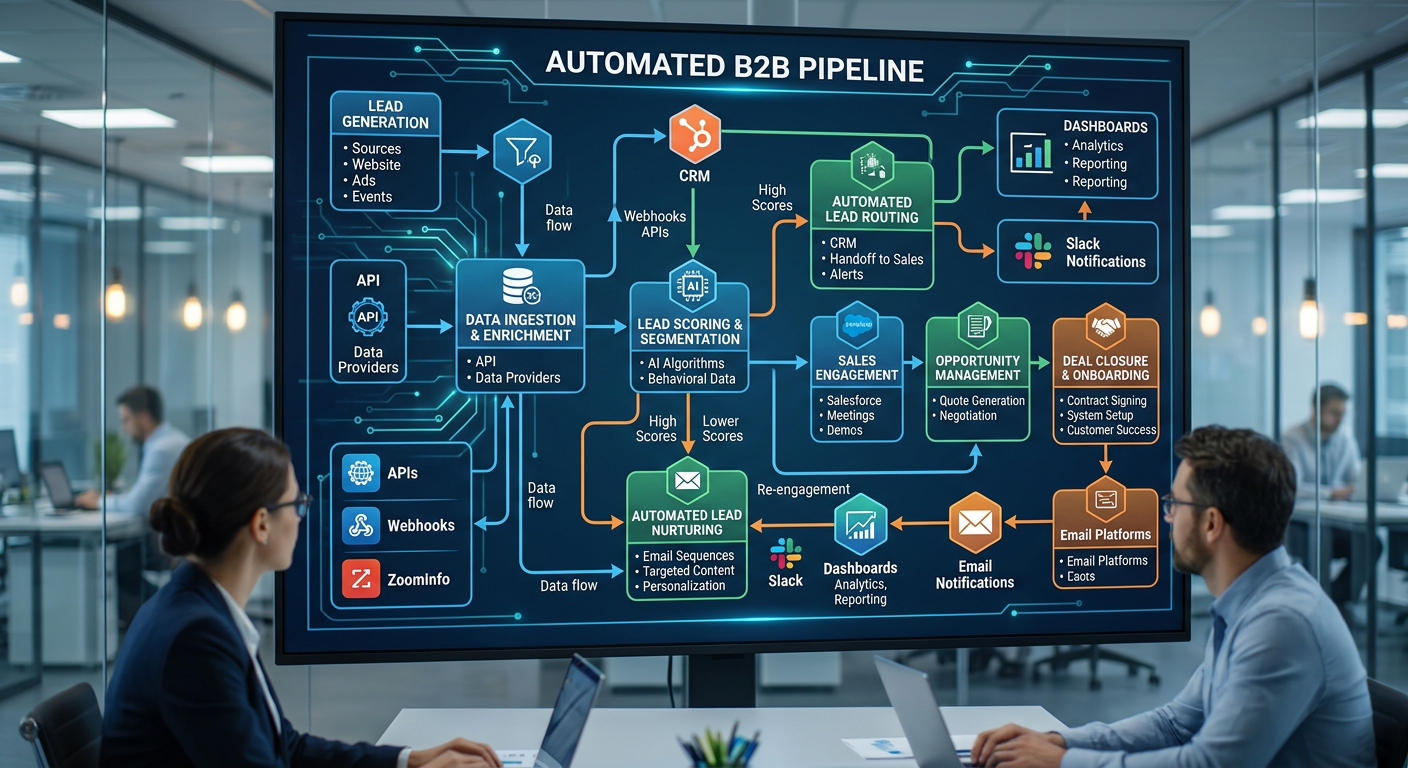
Securing this experience requires deeply integrated systems that connect your marketing outreach to your sales execution. If your customer relationship management (CRM) database is siloed, your team will waste valuable time on manual entry rather than closing deals. Sales representatives currently spend over [70% of their time on administrative tasks](https://monday.com/blog/crm-and-sales/how-to-scale-outbound-sales-with-automation-tools/), representing a major drag on your corporate productivity.
### Vertical Execution: Industry-Specific Solutions
Different B2B sectors face distinct operational bottlenecks during late-year planning. Below is the framework for deploying specialized systems across our three core target verticals during the Q3 window:
#### **1. Industrial Manufacturing**
Manufacturers must lock in contract visibility before primary procurement budgets freeze. Moving away from fragmented legacy spreadsheets is no longer optional if you want to bid on Tier 1 contracts. To scale your pipeline, you can deploy tailored infrastructure using tools like [HubSpot for Manufacturing](https://www.hubspot.com/manufacturing).
#### **2. Logistics Companies**
Logistics providers face intense operational stress as the year concludes. To survive this period, you must execute a dual strategy: Budget for 2027 & prep for the winter weather spike. You can eliminate quoting delays and provide transparent shipment visibility by integrating [HubSpot Sales Hub for Logistics](https://www.hubspot.com/sales-hub-for-logistics).
#### **3. Telecommunications Providers**
Telecom firms are transitioning away from commodity bandwidth sales toward complex, managed edge networks. Managing these intricate enterprise contract lifecycles requires specialized tracking. You can organize these multi-layer service agreements using [HubSpot for Telecommunications](https://www.hubspot.com/industry-solutions).
### Your Step-by-Step Q3 Blueprint
To ensure your organization hits the ground running on January 1st, follow this structured path to resolution during August and September:
- **Audit Your Data Infrastructure:** Eliminate duplicate records, clean up inactive leads, and ensure your CRM integrates directly with your enterprise resource planning (ERP) software.
- **Establish Your Digital Budget Early:** Finalize your technology and digital agency allocations before corporate fiscal lock-ins occur in November.
- **Pre-Produce Technical Content:** Build out your technical topic authority assets in advance, ensuring your brand stays highly visible when winter disruptions demand your operations team's full attention.
For comprehensive federal guidelines on modernizing industrial operations and scaling supply chain efficiency, you can consult the resources provided by the [NIST Manufacturing Extension Partnership](https://www.nist.gov/mep).
%20Suggested%20Alt%20Tag-%20Digital%20m%2025850%20(2).png?width=794&height=794&name=Firefly_Gemini%20Flash_(Image%20Asset-%20Multi-Channel%20Digital%20Analytics%20Dashboard)%20Suggested%20Alt%20Tag-%20Digital%20m%2025850%20(2).png)
### Frequently Asked Questions
**Why should we invest in CRM implementation during Q3 if our peak sales arrive in Q4?** Implementing technology during your busiest sales quarter guarantees operational disruption and lowered team adoption. Implementing your systems in Q3 ensures your pipelines are thoroughly tested, your staff is trained, and your engine is fully optimized before the high-volume traffic arrives.
**What are the primary benefits of transitioning to a hybrid sales model?** Hybrid sales representatives utilize digital tools to conduct research, nurture leads, and manage accounts remotely. This reduces client acquisition costs and allows your team to manage complex, long-cycle sales without geographic constraints.
**How long does a standard HubSpot integration take to deploy?** A clean, mid-market deployment typically requires 45 to 60 days. Beginning the process in August ensures your data architecture is fully functional by November, positioning you perfectly for Q1 execution.
### Accelerate Your 2027 Growth Engine
Waiting until the new year to plan your growth strategy means you are already a full quarter behind your competitors. Protecting your margins and growing your revenue requires proactive action while the market is quiet.
At DaBrian Marketing, we design high-impact [digital strategies](https://dabrianmarketing.com/) that eliminate operational administrative drag and maximize your sales velocity. We provide the expertise needed to turn your customer data into a measurable financial asset.
**Ready to secure your competitive moat?**
Schedule a comprehensive consultation and build your automated growth engine before the Q4 bottleneck hits.
[](https://cta-redirect.hubspot.com/cta/redirect/5624560/ea77ce27-099d-4d29-84d1-624fe1394631)
- [Share](http://www.facebook.com/sharer/sharer.php?u=https://blog.dabrianmarketing.com/solving-the-q4-bottleneck-with-strategic-q3-planning)
- [Tweet](https://twitter.com/intent/tweet?url=https://blog.dabrianmarketing.com/solving-the-q4-bottleneck-with-strategic-q3-planning&text=The%20First-Party%20Data%20Moat:%20Why%20Q3%20is%20the%20Critical%20Window%20to%20Build%20Your%202027%20B2B%20Growth%20Engine)
- [Share](http://www.linkedin.com/shareArticle?mini=true&url=https://blog.dabrianmarketing.com/solving-the-q4-bottleneck-with-strategic-q3-planning)
 [B2B marketing](https://blog.dabrianmarketing.com/tag/b2b-marketing), [Growth Strategy](https://blog.dabrianmarketing.com/tag/growth-strategy), [First Party Data](https://blog.dabrianmarketing.com/tag/first-party-data), [Manufacturing](https://blog.dabrianmarketing.com/tag/manufacturing), [Logistics](https://blog.dabrianmarketing.com/tag/logistics)
### Subscribe to our Blog
### Recent Posts
### Categories
- [Marketing Strategy (126)](https://blog.dabrianmarketing.com/tag/marketing-strategy)
- [web design (83)](https://blog.dabrianmarketing.com/tag/web-design)
- [digital marketing (73)](https://blog.dabrianmarketing.com/tag/digital-marketing)
- [Search Engine Optimization (SEO) (62)](https://blog.dabrianmarketing.com/tag/search-engine-optimization-seo)
- [Paid Search (PPC) (59)](https://blog.dabrianmarketing.com/tag/paid-search-ppc)
- [Digital Analytics (55)](https://blog.dabrianmarketing.com/tag/digital-analytics)
- [seo (51)](https://blog.dabrianmarketing.com/tag/seo)
- [Google Analytics (50)](https://blog.dabrianmarketing.com/tag/google-analytics)
- [News & Events (48)](https://blog.dabrianmarketing.com/tag/news-events)
- [Social Media Marketing & Management (47)](https://blog.dabrianmarketing.com/tag/social-media-marketing-management)
- [Content Marketing (45)](https://blog.dabrianmarketing.com/tag/content-marketing)
- [PPC (43)](https://blog.dabrianmarketing.com/tag/ppc)
- [Ecommerce & Retail Marketing (39)](https://blog.dabrianmarketing.com/tag/ecommerce-retail-marketing)
- [Business to Business Marketing (34)](https://blog.dabrianmarketing.com/tag/business-to-business-marketing)
- [Website design (34)](https://blog.dabrianmarketing.com/tag/website-design)
- [Mobile marketing (33)](https://blog.dabrianmarketing.com/tag/mobile-marketing)
- [local seo (32)](https://blog.dabrianmarketing.com/tag/local-seo)
- [eCommerce (31)](https://blog.dabrianmarketing.com/tag/ecommerce)
- [Inbound marketing (29)](https://blog.dabrianmarketing.com/tag/inbound-marketing)
- [B2B marketing (27)](https://blog.dabrianmarketing.com/tag/b2b-marketing)
- [social media (26)](https://blog.dabrianmarketing.com/tag/social-media)
- [email marketing (25)](https://blog.dabrianmarketing.com/tag/email-marketing)
- [social media marketing (25)](https://blog.dabrianmarketing.com/tag/social-media-marketing)
- [website redesign (25)](https://blog.dabrianmarketing.com/tag/website-redesign)
- [B2B (24)](https://blog.dabrianmarketing.com/tag/b2b)
- [Financial Services (23)](https://blog.dabrianmarketing.com/tag/financial-services)
- [website development (23)](https://blog.dabrianmarketing.com/tag/website-development)
- [Pay Per Click (20)](https://blog.dabrianmarketing.com/tag/pay-per-click)
- [SEO strategy (20)](https://blog.dabrianmarketing.com/tag/seo-strategy)
- [B2B marketing agency (19)](https://blog.dabrianmarketing.com/tag/b2b-marketing-agency)
- [marketing (19)](https://blog.dabrianmarketing.com/tag/marketing)
- [web development (19)](https://blog.dabrianmarketing.com/tag/web-development)
- [Google AdWords (17)](https://blog.dabrianmarketing.com/tag/google-adwords)
- [marketing automation (17)](https://blog.dabrianmarketing.com/tag/marketing-automation)
- [press release (16)](https://blog.dabrianmarketing.com/tag/press-release)
- [Social Media Management (15)](https://blog.dabrianmarketing.com/tag/social-media-management)
- [ecommerce marketing (15)](https://blog.dabrianmarketing.com/tag/ecommerce-marketing)
- [lead generation (15)](https://blog.dabrianmarketing.com/tag/lead-generation)
- [social media strategy (15)](https://blog.dabrianmarketing.com/tag/social-media-strategy)
- [Web Design Strategy/Website Strategy (14)](https://blog.dabrianmarketing.com/tag/web-design-strategy-website-strategy)
- [content (14)](https://blog.dabrianmarketing.com/tag/content)
- [web design services for small business (14)](https://blog.dabrianmarketing.com/tag/web-design-services-for-small-business)
- [Web Design Trends (13)](https://blog.dabrianmarketing.com/tag/web-design-trends)
- [financial services marketing (13)](https://blog.dabrianmarketing.com/tag/financial-services-marketing)
- [sales (13)](https://blog.dabrianmarketing.com/tag/sales)
- [Digital Branding (12)](https://blog.dabrianmarketing.com/tag/digital-branding)
- [Healthcare & Wellness (12)](https://blog.dabrianmarketing.com/tag/healthcare-wellness)
- [Social Strategy (12)](https://blog.dabrianmarketing.com/tag/social-strategy)
- [Video Marketing (12)](https://blog.dabrianmarketing.com/tag/video-marketing)
- [branding (12)](https://blog.dabrianmarketing.com/tag/branding)
- [search engine optimization (12)](https://blog.dabrianmarketing.com/tag/search-engine-optimization)
- [Analytics (11)](https://blog.dabrianmarketing.com/tag/analytics)
- [Artificial intelligence (AI) (11)](https://blog.dabrianmarketing.com/tag/artificial-intelligence-ai)
- [Retail Marketing (11)](https://blog.dabrianmarketing.com/tag/retail-marketing)
- [SEM (11)](https://blog.dabrianmarketing.com/tag/sem)
- [digital advertising (11)](https://blog.dabrianmarketing.com/tag/digital-advertising)
- [increase brand awareness (11)](https://blog.dabrianmarketing.com/tag/increase-brand-awareness)
- [internet marketing (11)](https://blog.dabrianmarketing.com/tag/internet-marketing)
- [online shopping (11)](https://blog.dabrianmarketing.com/tag/online-shopping)
- [responsive web design (11)](https://blog.dabrianmarketing.com/tag/responsive-web-design)
- [web analytics (11)](https://blog.dabrianmarketing.com/tag/web-analytics)
- [Healthcare Marketing (10)](https://blog.dabrianmarketing.com/tag/healthcare-marketing)
- [Home Services (10)](https://blog.dabrianmarketing.com/tag/home-services)
- [Lead Generation Marketing (10)](https://blog.dabrianmarketing.com/tag/lead-generation-marketing)
- [SEO Services (10)](https://blog.dabrianmarketing.com/tag/seo-services)
- [financial advisors marketing (10)](https://blog.dabrianmarketing.com/tag/financial-advisors-marketing)
- [local listing management (10)](https://blog.dabrianmarketing.com/tag/local-listing-management)
- [Bank Marketing (9)](https://blog.dabrianmarketing.com/tag/bank-marketing)
- [CRM (9)](https://blog.dabrianmarketing.com/tag/crm)
- [Content Planning (9)](https://blog.dabrianmarketing.com/tag/content-planning)
- [Google Ads (9)](https://blog.dabrianmarketing.com/tag/google-ads)
- [Inbound Marketing Strategies (9)](https://blog.dabrianmarketing.com/tag/inbound-marketing-strategies)
- [PPC Marketing (9)](https://blog.dabrianmarketing.com/tag/ppc-marketing)
- [WordPress (9)](https://blog.dabrianmarketing.com/tag/wordpress)
- [content development (9)](https://blog.dabrianmarketing.com/tag/content-development)
- [content strategy (9)](https://blog.dabrianmarketing.com/tag/content-strategy)
- [redesign website (9)](https://blog.dabrianmarketing.com/tag/redesign-website)
- [web designer (9)](https://blog.dabrianmarketing.com/tag/web-designer)
- [2024 Planning (8)](https://blog.dabrianmarketing.com/tag/2024-planning)
- [B2C Marketing (8)](https://blog.dabrianmarketing.com/tag/b2c-marketing)
- [Retail Sales (8)](https://blog.dabrianmarketing.com/tag/retail-sales)
- [Shopify (8)](https://blog.dabrianmarketing.com/tag/shopify)
- [Social Media Metrics (8)](https://blog.dabrianmarketing.com/tag/social-media-metrics)
- [Web Security (8)](https://blog.dabrianmarketing.com/tag/web-security)
- [b2b sales (8)](https://blog.dabrianmarketing.com/tag/b2b-sales)
- [financial marketing (8)](https://blog.dabrianmarketing.com/tag/financial-marketing)
- [project management (8)](https://blog.dabrianmarketing.com/tag/project-management)
- [social marketing (8)](https://blog.dabrianmarketing.com/tag/social-marketing)
- [social media analytics (8)](https://blog.dabrianmarketing.com/tag/social-media-analytics)
- [strategic marketing (8)](https://blog.dabrianmarketing.com/tag/strategic-marketing)
- [website (8)](https://blog.dabrianmarketing.com/tag/website)
- [2025 Planning (7)](https://blog.dabrianmarketing.com/tag/2025-planning)
- [AdWords (7)](https://blog.dabrianmarketing.com/tag/adwords)
- [Bing Ads (7)](https://blog.dabrianmarketing.com/tag/bing-ads)
- [Mobile design (7)](https://blog.dabrianmarketing.com/tag/mobile-design)
- [ROI (7)](https://blog.dabrianmarketing.com/tag/roi)
- [Sales Strategy (7)](https://blog.dabrianmarketing.com/tag/sales-strategy)
- [brand identity (7)](https://blog.dabrianmarketing.com/tag/brand-identity)
- [business strategy (7)](https://blog.dabrianmarketing.com/tag/business-strategy)
- [content optimization (7)](https://blog.dabrianmarketing.com/tag/content-optimization)
- [home services marketing (7)](https://blog.dabrianmarketing.com/tag/home-services-marketing)
- [link building (7)](https://blog.dabrianmarketing.com/tag/link-building)
- [mobile (7)](https://blog.dabrianmarketing.com/tag/mobile)
- [mobile website (7)](https://blog.dabrianmarketing.com/tag/mobile-website)
- [ppc advertising (7)](https://blog.dabrianmarketing.com/tag/ppc-advertising)
- [social tips (7)](https://blog.dabrianmarketing.com/tag/social-tips)
- [AI Content (6)](https://blog.dabrianmarketing.com/tag/ai-content)
- [CMS (6)](https://blog.dabrianmarketing.com/tag/cms)
- [Customer Persona (6)](https://blog.dabrianmarketing.com/tag/customer-persona)
- [Link Earning (6)](https://blog.dabrianmarketing.com/tag/link-earning)
- [Online Sales (6)](https://blog.dabrianmarketing.com/tag/online-sales)
- [SEO Agency (6)](https://blog.dabrianmarketing.com/tag/seo-agency)
- [SEO measurement (6)](https://blog.dabrianmarketing.com/tag/seo-measurement)
- [Search Engine Marketing (6)](https://blog.dabrianmarketing.com/tag/search-engine-marketing)
- [account-based marketing (6)](https://blog.dabrianmarketing.com/tag/account-based-marketing)
- [brand development (6)](https://blog.dabrianmarketing.com/tag/brand-development)
- [digital marketing agency (6)](https://blog.dabrianmarketing.com/tag/digital-marketing-agency)
- [digital marketing strategy (6)](https://blog.dabrianmarketing.com/tag/digital-marketing-strategy)
- [hubspot cms (6)](https://blog.dabrianmarketing.com/tag/hubspot-cms)
- [keyword research (6)](https://blog.dabrianmarketing.com/tag/keyword-research)
- [measurement (6)](https://blog.dabrianmarketing.com/tag/measurement)
- [news and events (6)](https://blog.dabrianmarketing.com/tag/news-and-events)
- [shopify website (6)](https://blog.dabrianmarketing.com/tag/shopify-website)
- [shopping ads (6)](https://blog.dabrianmarketing.com/tag/shopping-ads)
- [small business (6)](https://blog.dabrianmarketing.com/tag/small-business)
- [social analytics (6)](https://blog.dabrianmarketing.com/tag/social-analytics)
- [strategy (6)](https://blog.dabrianmarketing.com/tag/strategy)
- [Paid Search (5)](https://blog.dabrianmarketing.com/tag/paid-search)
- [Plumbing Marketing (5)](https://blog.dabrianmarketing.com/tag/plumbing-marketing)
- [brand guidelines (5)](https://blog.dabrianmarketing.com/tag/brand-guidelines)
- [business to business (5)](https://blog.dabrianmarketing.com/tag/business-to-business)
- [customer relationship management (5)](https://blog.dabrianmarketing.com/tag/customer-relationship-management)
- [customer relationship management tools (5)](https://blog.dabrianmarketing.com/tag/customer-relationship-management-tools)
- [google shopping (5)](https://blog.dabrianmarketing.com/tag/google-shopping)
- [hubspot agency (5)](https://blog.dabrianmarketing.com/tag/hubspot-agency)
- [inbound marketing strategy (5)](https://blog.dabrianmarketing.com/tag/inbound-marketing-strategy)
- [lead generation website (5)](https://blog.dabrianmarketing.com/tag/lead-generation-website)
- [marketing insights (5)](https://blog.dabrianmarketing.com/tag/marketing-insights)
- [marketing tips (5)](https://blog.dabrianmarketing.com/tag/marketing-tips)
- [measuring SEO (5)](https://blog.dabrianmarketing.com/tag/measuring-seo)
- [paid search campaigns (5)](https://blog.dabrianmarketing.com/tag/paid-search-campaigns)
- [ppc management (5)](https://blog.dabrianmarketing.com/tag/ppc-management)
- [sales CRM (5)](https://blog.dabrianmarketing.com/tag/sales-crm)
- [user experience (5)](https://blog.dabrianmarketing.com/tag/user-experience)
- [video (5)](https://blog.dabrianmarketing.com/tag/video)
- [web developer (5)](https://blog.dabrianmarketing.com/tag/web-developer)
- [2026 planning (4)](https://blog.dabrianmarketing.com/tag/2026-planning)
- [Artificial Intelligence (4)](https://blog.dabrianmarketing.com/tag/artificial-intelligence)
- [CMS Hub (4)](https://blog.dabrianmarketing.com/tag/cms-hub)
- [Call Tracking (4)](https://blog.dabrianmarketing.com/tag/call-tracking)
- [Facebook (4)](https://blog.dabrianmarketing.com/tag/facebook)
- [Improve productivity (4)](https://blog.dabrianmarketing.com/tag/improve-productivity)
- [Inbound Sales Strategy (4)](https://blog.dabrianmarketing.com/tag/inbound-sales-strategy)
- [Insurance Marketing (4)](https://blog.dabrianmarketing.com/tag/insurance-marketing)
- [KPIs (4)](https://blog.dabrianmarketing.com/tag/kpis)
- [Local Listings (4)](https://blog.dabrianmarketing.com/tag/local-listings)
- [Logo Design (4)](https://blog.dabrianmarketing.com/tag/logo-design)
- [Non-Profit Marketing (4)](https://blog.dabrianmarketing.com/tag/non-profit-marketing)
- [Organic Search (4)](https://blog.dabrianmarketing.com/tag/organic-search)
- [Outbound Sales Strategy (4)](https://blog.dabrianmarketing.com/tag/outbound-sales-strategy)
- [SERPS (4)](https://blog.dabrianmarketing.com/tag/serps)
- [Social media updates (4)](https://blog.dabrianmarketing.com/tag/social-media-updates)
- [Uncategorized (4)](https://blog.dabrianmarketing.com/tag/uncategorized)
- [Wealth Management marketing (4)](https://blog.dabrianmarketing.com/tag/wealth-management-marketing)
- [aeo (4)](https://blog.dabrianmarketing.com/tag/aeo)
- [compliance (4)](https://blog.dabrianmarketing.com/tag/compliance)
- [conversions (4)](https://blog.dabrianmarketing.com/tag/conversions)
- [creative design (4)](https://blog.dabrianmarketing.com/tag/creative-design)
- [credit union (4)](https://blog.dabrianmarketing.com/tag/credit-union)
- [customer relationship system (4)](https://blog.dabrianmarketing.com/tag/customer-relationship-system)
- [dabrian marketing (4)](https://blog.dabrianmarketing.com/tag/dabrian-marketing)
- [data (4)](https://blog.dabrianmarketing.com/tag/data)
- [ecommerce SEO (4)](https://blog.dabrianmarketing.com/tag/ecommerce-seo)
- [email (4)](https://blog.dabrianmarketing.com/tag/email)
- [home improvement (4)](https://blog.dabrianmarketing.com/tag/home-improvement)
- [leads (4)](https://blog.dabrianmarketing.com/tag/leads)
- [local search (4)](https://blog.dabrianmarketing.com/tag/local-search)
- [manufacturing marketing (4)](https://blog.dabrianmarketing.com/tag/manufacturing-marketing)
- [mobile advertising (4)](https://blog.dabrianmarketing.com/tag/mobile-advertising)
- [news (4)](https://blog.dabrianmarketing.com/tag/news)
- [optimization (4)](https://blog.dabrianmarketing.com/tag/optimization)
- [paid online advertising (4)](https://blog.dabrianmarketing.com/tag/paid-online-advertising)
- [sales funnel (4)](https://blog.dabrianmarketing.com/tag/sales-funnel)
- [sales pipeline (4)](https://blog.dabrianmarketing.com/tag/sales-pipeline)
- [security (4)](https://blog.dabrianmarketing.com/tag/security)
- [smart goals (4)](https://blog.dabrianmarketing.com/tag/smart-goals)
- [social advertising (4)](https://blog.dabrianmarketing.com/tag/social-advertising)
- [social media tips (4)](https://blog.dabrianmarketing.com/tag/social-media-tips)
- [tag management (4)](https://blog.dabrianmarketing.com/tag/tag-management)
- [trends (4)](https://blog.dabrianmarketing.com/tag/trends)
- [2023 (3)](https://blog.dabrianmarketing.com/tag/2023)
- [AI SEO (3)](https://blog.dabrianmarketing.com/tag/ai-seo)
- [Adobe Analytics (3)](https://blog.dabrianmarketing.com/tag/adobe-analytics)
- [Amazon Advertising (3)](https://blog.dabrianmarketing.com/tag/amazon-advertising)
- [Automotive Marketing (3)](https://blog.dabrianmarketing.com/tag/automotive-marketing)
- [B2B Content (3)](https://blog.dabrianmarketing.com/tag/b2b-content)
- [B2B Search Marketing (3)](https://blog.dabrianmarketing.com/tag/b2b-search-marketing)
- [B2B eCommerce (3)](https://blog.dabrianmarketing.com/tag/b2b-ecommerce)
- [B2C (3)](https://blog.dabrianmarketing.com/tag/b2c)
- [Continuous Website Improvement (3)](https://blog.dabrianmarketing.com/tag/continuous-website-improvement)
- [Google My Business (3)](https://blog.dabrianmarketing.com/tag/google-my-business)
- [Growth Driven Design (3)](https://blog.dabrianmarketing.com/tag/growth-driven-design)
- [HVAC (3)](https://blog.dabrianmarketing.com/tag/hvac)
- [Home Improvement Marketing (3)](https://blog.dabrianmarketing.com/tag/home-improvement-marketing)
- [Hospital Marketing (3)](https://blog.dabrianmarketing.com/tag/hospital-marketing)
- [Lawn Care Marketing (3)](https://blog.dabrianmarketing.com/tag/lawn-care-marketing)
- [LinkedIn (3)](https://blog.dabrianmarketing.com/tag/linkedin)
- [Marketing Budgeting (3)](https://blog.dabrianmarketing.com/tag/marketing-budgeting)
- [Measurement Planning (3)](https://blog.dabrianmarketing.com/tag/measurement-planning)
- [Multivariate Testing (3)](https://blog.dabrianmarketing.com/tag/multivariate-testing)
- [Online Business (3)](https://blog.dabrianmarketing.com/tag/online-business)
- [Partnership (3)](https://blog.dabrianmarketing.com/tag/partnership)
- [Personas (3)](https://blog.dabrianmarketing.com/tag/personas)
- [Product Inventory (3)](https://blog.dabrianmarketing.com/tag/product-inventory)
- [SEO Reporting (3)](https://blog.dabrianmarketing.com/tag/seo-reporting)
- [SOCIAL ECOMMERCE (3)](https://blog.dabrianmarketing.com/tag/social-ecommerce)
- [Sales Prospecting (3)](https://blog.dabrianmarketing.com/tag/sales-prospecting)
- [Sales and Marketing Alignment (3)](https://blog.dabrianmarketing.com/tag/sales-and-marketing-alignment)
- [Speed-to-Lead (3)](https://blog.dabrianmarketing.com/tag/speed-to-lead)
- [Time Management (3)](https://blog.dabrianmarketing.com/tag/time-management)
- [Twitter (3)](https://blog.dabrianmarketing.com/tag/twitter)
- [UX Design (3)](https://blog.dabrianmarketing.com/tag/ux-design)
- [UX research (3)](https://blog.dabrianmarketing.com/tag/ux-research)
- [adCenter (3)](https://blog.dabrianmarketing.com/tag/adcenter)
- [advertising (3)](https://blog.dabrianmarketing.com/tag/advertising)
- [api (3)](https://blog.dabrianmarketing.com/tag/api)
- [attribution modeling (3)](https://blog.dabrianmarketing.com/tag/attribution-modeling)
- [bank advertising (3)](https://blog.dabrianmarketing.com/tag/bank-advertising)
- [big data (3)](https://blog.dabrianmarketing.com/tag/big-data)
- [construction marketing (3)](https://blog.dabrianmarketing.com/tag/construction-marketing)
- [consumer services (3)](https://blog.dabrianmarketing.com/tag/consumer-services)
- [customer (3)](https://blog.dabrianmarketing.com/tag/customer)
- [data privacy (3)](https://blog.dabrianmarketing.com/tag/data-privacy)
- [digital content (3)](https://blog.dabrianmarketing.com/tag/digital-content)
- [digital marketing measurement (3)](https://blog.dabrianmarketing.com/tag/digital-marketing-measurement)
- [digital marketing services (3)](https://blog.dabrianmarketing.com/tag/digital-marketing-services)
- [email for ecommerce (3)](https://blog.dabrianmarketing.com/tag/email-for-ecommerce)
- [facebook ads (3)](https://blog.dabrianmarketing.com/tag/facebook-ads)
- [google partners connect (3)](https://blog.dabrianmarketing.com/tag/google-partners-connect)
- [graphic design (3)](https://blog.dabrianmarketing.com/tag/graphic-design)
- [hubspot (3)](https://blog.dabrianmarketing.com/tag/hubspot)
- [hubspot crm (3)](https://blog.dabrianmarketing.com/tag/hubspot-crm)
- [hubspot sales (3)](https://blog.dabrianmarketing.com/tag/hubspot-sales)
- [instagram (3)](https://blog.dabrianmarketing.com/tag/instagram)
- [marketing metrics (3)](https://blog.dabrianmarketing.com/tag/marketing-metrics)
- [minority owned businesses (3)](https://blog.dabrianmarketing.com/tag/minority-owned-businesses)
- [monitor (3)](https://blog.dabrianmarketing.com/tag/monitor)
- [omnichannel Marketing (3)](https://blog.dabrianmarketing.com/tag/omnichannel-marketing)
- [on-page seo (3)](https://blog.dabrianmarketing.com/tag/on-page-seo)
- [online reputation management (3)](https://blog.dabrianmarketing.com/tag/online-reputation-management)
- [online store (3)](https://blog.dabrianmarketing.com/tag/online-store)
- [paid search advertising (3)](https://blog.dabrianmarketing.com/tag/paid-search-advertising)
- [pay per click advertising campaigns (3)](https://blog.dabrianmarketing.com/tag/pay-per-click-advertising-campaigns)
- [plumbing (3)](https://blog.dabrianmarketing.com/tag/plumbing)
- [ppc account management (3)](https://blog.dabrianmarketing.com/tag/ppc-account-management)
- [reputation management (3)](https://blog.dabrianmarketing.com/tag/reputation-management)
- [sales enablement (3)](https://blog.dabrianmarketing.com/tag/sales-enablement)
- [tips (3)](https://blog.dabrianmarketing.com/tag/tips)
- [voice search (3)](https://blog.dabrianmarketing.com/tag/voice-search)
- [#agencylife (2)](https://blog.dabrianmarketing.com/tag/agencylife)
- [2022 (2)](https://blog.dabrianmarketing.com/tag/2022)
- [2023 planning (2)](https://blog.dabrianmarketing.com/tag/2023-planning)
- [2024 (2)](https://blog.dabrianmarketing.com/tag/2024)
- [ABM (2)](https://blog.dabrianmarketing.com/tag/abm)
- [B2B growth (2)](https://blog.dabrianmarketing.com/tag/b2b-growth)
- [BigCommerce (2)](https://blog.dabrianmarketing.com/tag/bigcommerce)
- [Business growth opportunities (2)](https://blog.dabrianmarketing.com/tag/business-growth-opportunities)
- [COVID (2)](https://blog.dabrianmarketing.com/tag/covid)
- [CRM alignment (2)](https://blog.dabrianmarketing.com/tag/crm-alignment)
- [Conversion Tracking (2)](https://blog.dabrianmarketing.com/tag/conversion-tracking)
- [Covid-19 (2)](https://blog.dabrianmarketing.com/tag/covid-19)
- [Facebook Tips (2)](https://blog.dabrianmarketing.com/tag/facebook-tips)
- [Facebook business (2)](https://blog.dabrianmarketing.com/tag/facebook-business)
- [GDPR (2)](https://blog.dabrianmarketing.com/tag/gdpr)
- [Gmail tips (2)](https://blog.dabrianmarketing.com/tag/gmail-tips)
- [Google Business Profile (2)](https://blog.dabrianmarketing.com/tag/google-business-profile)
- [Google event (2)](https://blog.dabrianmarketing.com/tag/google-event)
- [Home Improvement Trends (2)](https://blog.dabrianmarketing.com/tag/home-improvement-trends)
- [LinkedIn Ads (2)](https://blog.dabrianmarketing.com/tag/linkedin-ads)
- [Local SEO Strategy (2)](https://blog.dabrianmarketing.com/tag/local-seo-strategy)
- [Logistics (2)](https://blog.dabrianmarketing.com/tag/logistics)
- [Minority Business Enterprise (2)](https://blog.dabrianmarketing.com/tag/minority-business-enterprise)
- [Online Advertising (2)](https://blog.dabrianmarketing.com/tag/online-advertising)
- [Product Data Feed (2)](https://blog.dabrianmarketing.com/tag/product-data-feed)
- [Qualitative Data (2)](https://blog.dabrianmarketing.com/tag/qualitative-data)
- [Restaurant Marketing (2)](https://blog.dabrianmarketing.com/tag/restaurant-marketing)
- [SBE (2)](https://blog.dabrianmarketing.com/tag/sbe)
- [Twitter Tips (2)](https://blog.dabrianmarketing.com/tag/twitter-tips)
- [UX (2)](https://blog.dabrianmarketing.com/tag/ux)
- [Video SEO (2)](https://blog.dabrianmarketing.com/tag/video-seo)
- [Yelp (2)](https://blog.dabrianmarketing.com/tag/yelp)
- [ad copy (2)](https://blog.dabrianmarketing.com/tag/ad-copy)
- [agency transparency (2)](https://blog.dabrianmarketing.com/tag/agency-transparency)
- [algorithm management (2)](https://blog.dabrianmarketing.com/tag/algorithm-management)
- [automated bidding (2)](https://blog.dabrianmarketing.com/tag/automated-bidding)
- [budget (2)](https://blog.dabrianmarketing.com/tag/budget)
- [business growth (2)](https://blog.dabrianmarketing.com/tag/business-growth)
- [certification (2)](https://blog.dabrianmarketing.com/tag/certification)
- [client appreciation (2)](https://blog.dabrianmarketing.com/tag/client-appreciation)
- [clients (2)](https://blog.dabrianmarketing.com/tag/clients)
- [cloud (2)](https://blog.dabrianmarketing.com/tag/cloud)
- [communication (2)](https://blog.dabrianmarketing.com/tag/communication)
- [content promotion (2)](https://blog.dabrianmarketing.com/tag/content-promotion)
- [copywriting (2)](https://blog.dabrianmarketing.com/tag/copywriting)
- [data driven culture (2)](https://blog.dabrianmarketing.com/tag/data-driven-culture)
- [data driven marketing (2)](https://blog.dabrianmarketing.com/tag/data-driven-marketing)
- [data mining (2)](https://blog.dabrianmarketing.com/tag/data-mining)
- [design (2)](https://blog.dabrianmarketing.com/tag/design)
- [digital avertising (2)](https://blog.dabrianmarketing.com/tag/digital-avertising)
- [digital transformation (2)](https://blog.dabrianmarketing.com/tag/digital-transformation)
- [digital vs traditional (2)](https://blog.dabrianmarketing.com/tag/digital-vs-traditional)
- [education (2)](https://blog.dabrianmarketing.com/tag/education)
- [email analytics (2)](https://blog.dabrianmarketing.com/tag/email-analytics)
- [email marketing measurement (2)](https://blog.dabrianmarketing.com/tag/email-marketing-measurement)
- [enhanced campaigns (2)](https://blog.dabrianmarketing.com/tag/enhanced-campaigns)
- [guide (2)](https://blog.dabrianmarketing.com/tag/guide)
- [healthcare marketing agency (2)](https://blog.dabrianmarketing.com/tag/healthcare-marketing-agency)
- [hootsuite (2)](https://blog.dabrianmarketing.com/tag/hootsuite)
- [hosting services (2)](https://blog.dabrianmarketing.com/tag/hosting-services)
- [implementing (2)](https://blog.dabrianmarketing.com/tag/implementing)
- [inbound leads (2)](https://blog.dabrianmarketing.com/tag/inbound-leads)
- [inbound success plan (2)](https://blog.dabrianmarketing.com/tag/inbound-success-plan)
- [industries (2)](https://blog.dabrianmarketing.com/tag/industries)
- [industry solutions (2)](https://blog.dabrianmarketing.com/tag/industry-solutions)
- [insurance and trust (2)](https://blog.dabrianmarketing.com/tag/insurance-and-trust)
- [interactive content (2)](https://blog.dabrianmarketing.com/tag/interactive-content)
- [internet (2)](https://blog.dabrianmarketing.com/tag/internet)
- [landing (2)](https://blog.dabrianmarketing.com/tag/landing)
- [landing page (2)](https://blog.dabrianmarketing.com/tag/landing-page)
- [lead generation tools (2)](https://blog.dabrianmarketing.com/tag/lead-generation-tools)
- [lehigh valley (2)](https://blog.dabrianmarketing.com/tag/lehigh-valley)
- [local business (2)](https://blog.dabrianmarketing.com/tag/local-business)
- [local event (2)](https://blog.dabrianmarketing.com/tag/local-event)
- [local listing (2)](https://blog.dabrianmarketing.com/tag/local-listing)
- [logo types (2)](https://blog.dabrianmarketing.com/tag/logo-types)
- [marketing tools (2)](https://blog.dabrianmarketing.com/tag/marketing-tools)
- [measure (2)](https://blog.dabrianmarketing.com/tag/measure)
- [medical marketing (2)](https://blog.dabrianmarketing.com/tag/medical-marketing)
- [mobile analytics (2)](https://blog.dabrianmarketing.com/tag/mobile-analytics)
- [mobile app (2)](https://blog.dabrianmarketing.com/tag/mobile-app)
- [mobile optimization (2)](https://blog.dabrianmarketing.com/tag/mobile-optimization)
- [mobile seo (2)](https://blog.dabrianmarketing.com/tag/mobile-seo)
- [multichannel (2)](https://blog.dabrianmarketing.com/tag/multichannel)
- [multichannel marketing (2)](https://blog.dabrianmarketing.com/tag/multichannel-marketing)
- [native ads (2)](https://blog.dabrianmarketing.com/tag/native-ads)
- [news release (2)](https://blog.dabrianmarketing.com/tag/news-release)
- [non-profit (2)](https://blog.dabrianmarketing.com/tag/non-profit)
- [nonprofit marketing (2)](https://blog.dabrianmarketing.com/tag/nonprofit-marketing)
- [one page web design (2)](https://blog.dabrianmarketing.com/tag/one-page-web-design)
- [operations process (2)](https://blog.dabrianmarketing.com/tag/operations-process)
- [outbound marketing (2)](https://blog.dabrianmarketing.com/tag/outbound-marketing)
- [phone calls (2)](https://blog.dabrianmarketing.com/tag/phone-calls)
- [platform (2)](https://blog.dabrianmarketing.com/tag/platform)
- [rackspace (2)](https://blog.dabrianmarketing.com/tag/rackspace)
- [reading pa (2)](https://blog.dabrianmarketing.com/tag/reading-pa)
- [remarketing (2)](https://blog.dabrianmarketing.com/tag/remarketing)
- [retargeting (2)](https://blog.dabrianmarketing.com/tag/retargeting)
- [sales plan (2)](https://blog.dabrianmarketing.com/tag/sales-plan)
- [segmentation (2)](https://blog.dabrianmarketing.com/tag/segmentation)
- [self marketing (2)](https://blog.dabrianmarketing.com/tag/self-marketing)
- [social (2)](https://blog.dabrianmarketing.com/tag/social)
- [social commerce (2)](https://blog.dabrianmarketing.com/tag/social-commerce)
- [social media agency (2)](https://blog.dabrianmarketing.com/tag/social-media-agency)
- [staffing and recruitment (2)](https://blog.dabrianmarketing.com/tag/staffing-and-recruitment)
- [successful (2)](https://blog.dabrianmarketing.com/tag/successful)
- [target audience (2)](https://blog.dabrianmarketing.com/tag/target-audience)
- [tariffs (2)](https://blog.dabrianmarketing.com/tag/tariffs)
- [technical seo (2)](https://blog.dabrianmarketing.com/tag/technical-seo)
- [testing (2)](https://blog.dabrianmarketing.com/tag/testing)
- [tracking (2)](https://blog.dabrianmarketing.com/tag/tracking)
- [universal analytics (2)](https://blog.dabrianmarketing.com/tag/universal-analytics)
- [website optimization (2)](https://blog.dabrianmarketing.com/tag/website-optimization)
- [work platforms (2)](https://blog.dabrianmarketing.com/tag/work-platforms)
- [workflows (2)](https://blog.dabrianmarketing.com/tag/workflows)
- [1 page sales plan (1)](https://blog.dabrianmarketing.com/tag/1-page-sales-plan)
- [2021 (1)](https://blog.dabrianmarketing.com/tag/2021)
- [2022 planning (1)](https://blog.dabrianmarketing.com/tag/2022-planning)
- [3pl (1)](https://blog.dabrianmarketing.com/tag/3pl)
- [5 basic principles (1)](https://blog.dabrianmarketing.com/tag/5-basic-principles)
- [AAF (1)](https://blog.dabrianmarketing.com/tag/aaf)
- [AAF-GLV (1)](https://blog.dabrianmarketing.com/tag/aaf-glv)
- [ADA Compliance (1)](https://blog.dabrianmarketing.com/tag/ada-compliance)
- [AI (1)](https://blog.dabrianmarketing.com/tag/ai)
- [Alignment (1)](https://blog.dabrianmarketing.com/tag/alignment)
- [American Advertising Federation (1)](https://blog.dabrianmarketing.com/tag/american-advertising-federation)
- [American Advertising Federation Greater Lehigh Val (1)](https://blog.dabrianmarketing.com/tag/american-advertising-federation-greater-lehigh-val)
- [Answer Engine Optimization (1)](https://blog.dabrianmarketing.com/tag/answer-engine-optimization)
- [AuthorRank (1)](https://blog.dabrianmarketing.com/tag/authorrank)
- [B2B Marketing Strategy (1)](https://blog.dabrianmarketing.com/tag/b2b-marketing-strategy)
- [Backlinks (1)](https://blog.dabrianmarketing.com/tag/backlinks)
- [Bank Lead Generation (1)](https://blog.dabrianmarketing.com/tag/bank-lead-generation)
- [Brightlocal (1)](https://blog.dabrianmarketing.com/tag/brightlocal)
- [Budget Planning (1)](https://blog.dabrianmarketing.com/tag/budget-planning)
- [Business Operations (1)](https://blog.dabrianmarketing.com/tag/business-operations)
- [ChatGPT Marketing (1)](https://blog.dabrianmarketing.com/tag/chatgpt-marketing)
- [Cheap SEO Services (1)](https://blog.dabrianmarketing.com/tag/cheap-seo-services)
- [Cloud U (1)](https://blog.dabrianmarketing.com/tag/cloud-u)
- [Cold Calls (1)](https://blog.dabrianmarketing.com/tag/cold-calls)
- [Cold Email (1)](https://blog.dabrianmarketing.com/tag/cold-email)
- [Cold Outreach (1)](https://blog.dabrianmarketing.com/tag/cold-outreach)
- [Contractor Lead Generation (1)](https://blog.dabrianmarketing.com/tag/contractor-lead-generation)
- [Copywriter (1)](https://blog.dabrianmarketing.com/tag/copywriter)
- [Customer Acquisition (1)](https://blog.dabrianmarketing.com/tag/customer-acquisition)
- [Digital Health Marketing (1)](https://blog.dabrianmarketing.com/tag/digital-health-marketing)
- [Display Advertising (1)](https://blog.dabrianmarketing.com/tag/display-advertising)
- [Dynamic Text (1)](https://blog.dabrianmarketing.com/tag/dynamic-text)
- [Ecommerce Strategy (1)](https://blog.dabrianmarketing.com/tag/ecommerce-strategy)
- [Employee Advocacy (1)](https://blog.dabrianmarketing.com/tag/employee-advocacy)
- [Feed Optimization (1)](https://blog.dabrianmarketing.com/tag/feed-optimization)
- [Financial SEO (1)](https://blog.dabrianmarketing.com/tag/financial-seo)
- [First Party Data (1)](https://blog.dabrianmarketing.com/tag/first-party-data)
- [Fractional Marketing (1)](https://blog.dabrianmarketing.com/tag/fractional-marketing)
- [GK Elite (1)](https://blog.dabrianmarketing.com/tag/gk-elite)
- [General (1)](https://blog.dabrianmarketing.com/tag/general)
- [Generative Engine Optimization (1)](https://blog.dabrianmarketing.com/tag/generative-engine-optimization)
- [Google AI Mode for Healthcare (1)](https://blog.dabrianmarketing.com/tag/google-ai-mode-for-healthcare)
- [Google Ads 2026 (1)](https://blog.dabrianmarketing.com/tag/google-ads-2026)
- [Google Guidelines (1)](https://blog.dabrianmarketing.com/tag/google-guidelines)
- [Google Manufacturer Center (1)](https://blog.dabrianmarketing.com/tag/google-manufacturer-center)
- [Google Marketing Live (1)](https://blog.dabrianmarketing.com/tag/google-marketing-live)
- [Google Rankbrain (1)](https://blog.dabrianmarketing.com/tag/google-rankbrain)
- [Google Rankings (1)](https://blog.dabrianmarketing.com/tag/google-rankings)
- [Google reviews (1)](https://blog.dabrianmarketing.com/tag/google-reviews)
- [Google+ (1)](https://blog.dabrianmarketing.com/tag/google)
- [Growth Strategy (1)](https://blog.dabrianmarketing.com/tag/growth-strategy)
- [HIPAA Compliance (1)](https://blog.dabrianmarketing.com/tag/hipaa-compliance)
- [HIPAA Compliant Marketing (1)](https://blog.dabrianmarketing.com/tag/hipaa-compliant-marketing)
- [HIPPA Compliance (1)](https://blog.dabrianmarketing.com/tag/hippa-compliance)
- [HVAC & Plumbing Strategy (1)](https://blog.dabrianmarketing.com/tag/hvac-plumbing-strategy)
- [Healthcare AI Search (1)](https://blog.dabrianmarketing.com/tag/healthcare-ai-search)
- [Healthcare Advertising (1)](https://blog.dabrianmarketing.com/tag/healthcare-advertising)
- [Healthcare Automation (1)](https://blog.dabrianmarketing.com/tag/healthcare-automation)
- [Healthcare Strategy (1)](https://blog.dabrianmarketing.com/tag/healthcare-strategy)
- [Hospitality & Travel (1)](https://blog.dabrianmarketing.com/tag/hospitality-travel)
- [Hubspot Onboarding (1)](https://blog.dabrianmarketing.com/tag/hubspot-onboarding)
- [Hybrid Manufacturing (1)](https://blog.dabrianmarketing.com/tag/hybrid-manufacturing)
- [Independent Medical Practice (1)](https://blog.dabrianmarketing.com/tag/independent-medical-practice)
- [Independent Medical Practices (1)](https://blog.dabrianmarketing.com/tag/independent-medical-practices)
- [Independent Practice (1)](https://blog.dabrianmarketing.com/tag/independent-practice)
- [Landscaping (1)](https://blog.dabrianmarketing.com/tag/landscaping)
- [Landscaping Marketing (1)](https://blog.dabrianmarketing.com/tag/landscaping-marketing)
- [Legal advice (1)](https://blog.dabrianmarketing.com/tag/legal-advice)
- [Load-Time (1)](https://blog.dabrianmarketing.com/tag/load-time)
- [MBE (1)](https://blog.dabrianmarketing.com/tag/mbe)
- [MWBE (1)](https://blog.dabrianmarketing.com/tag/mwbe)
- [Maintenance Membership (1)](https://blog.dabrianmarketing.com/tag/maintenance-membership)
- [Manufacturing (1)](https://blog.dabrianmarketing.com/tag/manufacturing)
- [Medial PPC (1)](https://blog.dabrianmarketing.com/tag/medial-ppc)
- [Medical Practice Growth (1)](https://blog.dabrianmarketing.com/tag/medical-practice-growth)
- [Medical Practice Marketing (1)](https://blog.dabrianmarketing.com/tag/medical-practice-marketing)
- [Medical Practice SEO (1)](https://blog.dabrianmarketing.com/tag/medical-practice-seo)
- [Microsoft adCenter (1)](https://blog.dabrianmarketing.com/tag/microsoft-adcenter)
- [Millennials (1)](https://blog.dabrianmarketing.com/tag/millennials)
- [ODYSSEY Battery (1)](https://blog.dabrianmarketing.com/tag/odyssey-battery)
- [Operational Efficiency (1)](https://blog.dabrianmarketing.com/tag/operational-efficiency)
- [Patient Reactivation (1)](https://blog.dabrianmarketing.com/tag/patient-reactivation)
- [Pest Control Marketing (1)](https://blog.dabrianmarketing.com/tag/pest-control-marketing)
- [Pipedrive (1)](https://blog.dabrianmarketing.com/tag/pipedrive)
- [Practice Growth (1)](https://blog.dabrianmarketing.com/tag/practice-growth)
- [Practice Management (1)](https://blog.dabrianmarketing.com/tag/practice-management)
- [Programmatic Advertising (1)](https://blog.dabrianmarketing.com/tag/programmatic-advertising)
- [Project Management Systems (1)](https://blog.dabrianmarketing.com/tag/project-management-systems)
- [Q4 Healthcare Marketing (1)](https://blog.dabrianmarketing.com/tag/q4-healthcare-marketing)
- [Quality Score (1)](https://blog.dabrianmarketing.com/tag/quality-score)
- [ROAS (1)](https://blog.dabrianmarketing.com/tag/roas)
- [Recurring Revenue (1)](https://blog.dabrianmarketing.com/tag/recurring-revenue)
- [Regulation S-P (1)](https://blog.dabrianmarketing.com/tag/regulation-s-p)
- [SEC Mandate (1)](https://blog.dabrianmarketing.com/tag/sec-mandate)
- [SEO strategy in 2015 (1)](https://blog.dabrianmarketing.com/tag/seo-strategy-in-2015)
- [Sales Calls (1)](https://blog.dabrianmarketing.com/tag/sales-calls)
- [Shopify partner (1)](https://blog.dabrianmarketing.com/tag/shopify-partner)
- [Shoulder Season (1)](https://blog.dabrianmarketing.com/tag/shoulder-season)
- [Soc (1)](https://blog.dabrianmarketing.com/tag/soc)
- [Specialty Practice Marketing (1)](https://blog.dabrianmarketing.com/tag/specialty-practice-marketing)
- [Toptrends (1)](https://blog.dabrianmarketing.com/tag/toptrends)
- [URL Structure (1)](https://blog.dabrianmarketing.com/tag/url-structure)
- [URL tagging (1)](https://blog.dabrianmarketing.com/tag/url-tagging)
- [User Behavior (1)](https://blog.dabrianmarketing.com/tag/user-behavior)
- [VeteransDay (1)](https://blog.dabrianmarketing.com/tag/veteransday)
- [Wealth Management (1)](https://blog.dabrianmarketing.com/tag/wealth-management)
- [Woocommerce (1)](https://blog.dabrianmarketing.com/tag/woocommerce)
- [accessibilitiy (1)](https://blog.dabrianmarketing.com/tag/accessibilitiy)
- [accessibility (1)](https://blog.dabrianmarketing.com/tag/accessibility)
- [accounts (1)](https://blog.dabrianmarketing.com/tag/accounts)
- [administrative (1)](https://blog.dabrianmarketing.com/tag/administrative)
- [advisor efficiency (1)](https://blog.dabrianmarketing.com/tag/advisor-efficiency)
- [align (1)](https://blog.dabrianmarketing.com/tag/align)
- [analytics framework (1)](https://blog.dabrianmarketing.com/tag/analytics-framework)
- [artisanal cheese (1)](https://blog.dabrianmarketing.com/tag/artisanal-cheese)
- [attribution (1)](https://blog.dabrianmarketing.com/tag/attribution)
- [audience segmentation (1)](https://blog.dabrianmarketing.com/tag/audience-segmentation)
- [authorship (1)](https://blog.dabrianmarketing.com/tag/authorship)
- [auto dealers (1)](https://blog.dabrianmarketing.com/tag/auto-dealers)
- [b2b buying habits (1)](https://blog.dabrianmarketing.com/tag/b2b-buying-habits)
- [bidding strategy (1)](https://blog.dabrianmarketing.com/tag/bidding-strategy)
- [blog (1)](https://blog.dabrianmarketing.com/tag/blog)
- [bounce rate (1)](https://blog.dabrianmarketing.com/tag/bounce-rate)
- [brand culture (1)](https://blog.dabrianmarketing.com/tag/brand-culture)
- [branded search (1)](https://blog.dabrianmarketing.com/tag/branded-search)
- [bug (1)](https://blog.dabrianmarketing.com/tag/bug)
- [business (1)](https://blog.dabrianmarketing.com/tag/business)
- [business development (1)](https://blog.dabrianmarketing.com/tag/business-development)
- [business plan (1)](https://blog.dabrianmarketing.com/tag/business-plan)
- [business systems (1)](https://blog.dabrianmarketing.com/tag/business-systems)
- [business tech (1)](https://blog.dabrianmarketing.com/tag/business-tech)
- [buyer's journey (1)](https://blog.dabrianmarketing.com/tag/buyers-journey)
- [buying process (1)](https://blog.dabrianmarketing.com/tag/buying-process)
- [campaign tagging (1)](https://blog.dabrianmarketing.com/tag/campaign-tagging)
- [campaign tracking (1)](https://blog.dabrianmarketing.com/tag/campaign-tracking)
- [candidate marketing (1)](https://blog.dabrianmarketing.com/tag/candidate-marketing)
- [capturing (1)](https://blog.dabrianmarketing.com/tag/capturing)
- [cause marketing (1)](https://blog.dabrianmarketing.com/tag/cause-marketing)
- [citations (1)](https://blog.dabrianmarketing.com/tag/citations)
- [click-and-mortar (1)](https://blog.dabrianmarketing.com/tag/click-and-mortar)
- [column hack (1)](https://blog.dabrianmarketing.com/tag/column-hack)
- [combination marks (1)](https://blog.dabrianmarketing.com/tag/combination-marks)
- [competitor analysis (1)](https://blog.dabrianmarketing.com/tag/competitor-analysis)
- [competitor research (1)](https://blog.dabrianmarketing.com/tag/competitor-research)
- [content hub (1)](https://blog.dabrianmarketing.com/tag/content-hub)
- [content syndication (1)](https://blog.dabrianmarketing.com/tag/content-syndication)
- [conversion (1)](https://blog.dabrianmarketing.com/tag/conversion)
- [cost data (1)](https://blog.dabrianmarketing.com/tag/cost-data)
- [cpa (1)](https://blog.dabrianmarketing.com/tag/cpa)
- [cpc (1)](https://blog.dabrianmarketing.com/tag/cpc)
- [crowdsourced marketing (1)](https://blog.dabrianmarketing.com/tag/crowdsourced-marketing)
- [crowdsourcing (1)](https://blog.dabrianmarketing.com/tag/crowdsourcing)
- [customer journey (1)](https://blog.dabrianmarketing.com/tag/customer-journey)
- [customer segments (1)](https://blog.dabrianmarketing.com/tag/customer-segments)
- [cyber monday (1)](https://blog.dabrianmarketing.com/tag/cyber-monday)
- [daa symposium (1)](https://blog.dabrianmarketing.com/tag/daa-symposium)
- [data security (1)](https://blog.dabrianmarketing.com/tag/data-security)
- [dental marketing (1)](https://blog.dabrianmarketing.com/tag/dental-marketing)
- [desktop design (1)](https://blog.dabrianmarketing.com/tag/desktop-design)
- [don draper (1)](https://blog.dabrianmarketing.com/tag/don-draper)
- [downtown improvement district (1)](https://blog.dabrianmarketing.com/tag/downtown-improvement-district)
- [efforts (1)](https://blog.dabrianmarketing.com/tag/efforts)
- [election (1)](https://blog.dabrianmarketing.com/tag/election)
- [email campaigns (1)](https://blog.dabrianmarketing.com/tag/email-campaigns)
- [email design (1)](https://blog.dabrianmarketing.com/tag/email-design)
- [email guidelines (1)](https://blog.dabrianmarketing.com/tag/email-guidelines)
- [email organizing tips (1)](https://blog.dabrianmarketing.com/tag/email-organizing-tips)
- [emblems (1)](https://blog.dabrianmarketing.com/tag/emblems)
- [emergency search (1)](https://blog.dabrianmarketing.com/tag/emergency-search)
- [engagement (1)](https://blog.dabrianmarketing.com/tag/engagement)
- [enterprise search (1)](https://blog.dabrianmarketing.com/tag/enterprise-search)
- [event (1)](https://blog.dabrianmarketing.com/tag/event)
- [event sponsorship (1)](https://blog.dabrianmarketing.com/tag/event-sponsorship)
- [exact (1)](https://blog.dabrianmarketing.com/tag/exact)
- [expansion (1)](https://blog.dabrianmarketing.com/tag/expansion)
- [experiments (1)](https://blog.dabrianmarketing.com/tag/experiments)
- [free website (1)](https://blog.dabrianmarketing.com/tag/free-website)
- [ga (1)](https://blog.dabrianmarketing.com/tag/ga)
- [geo (1)](https://blog.dabrianmarketing.com/tag/geo)
- [gmail tricks (1)](https://blog.dabrianmarketing.com/tag/gmail-tricks)
- [google authorship (1)](https://blog.dabrianmarketing.com/tag/google-authorship)
- [greater lehigh valley chamber of commerce (1)](https://blog.dabrianmarketing.com/tag/greater-lehigh-valley-chamber-of-commerce)
- [growth strategies (1)](https://blog.dabrianmarketing.com/tag/growth-strategies)
- [heartbleed (1)](https://blog.dabrianmarketing.com/tag/heartbleed)
- [hiring (1)](https://blog.dabrianmarketing.com/tag/hiring)
- [hubspot content hub (1)](https://blog.dabrianmarketing.com/tag/hubspot-content-hub)
- [hubspot solutions partner (1)](https://blog.dabrianmarketing.com/tag/hubspot-solutions-partner)
- [icons (1)](https://blog.dabrianmarketing.com/tag/icons)
- [increase (1)](https://blog.dabrianmarketing.com/tag/increase)
- [industrial manufacturing (1)](https://blog.dabrianmarketing.com/tag/industrial-manufacturing)
- [infographic (1)](https://blog.dabrianmarketing.com/tag/infographic)
- [integrated marketing (1)](https://blog.dabrianmarketing.com/tag/integrated-marketing)
- [integration (1)](https://blog.dabrianmarketing.com/tag/integration)
- [inventory file (1)](https://blog.dabrianmarketing.com/tag/inventory-file)
- [kerning (1)](https://blog.dabrianmarketing.com/tag/kerning)
- [keyword match types (1)](https://blog.dabrianmarketing.com/tag/keyword-match-types)
- [keywords (1)](https://blog.dabrianmarketing.com/tag/keywords)
- [law firm (1)](https://blog.dabrianmarketing.com/tag/law-firm)
- [law firm marketing (1)](https://blog.dabrianmarketing.com/tag/law-firm-marketing)
- [law practice (1)](https://blog.dabrianmarketing.com/tag/law-practice)
- [legal services (1)](https://blog.dabrianmarketing.com/tag/legal-services)
- [letter marks (1)](https://blog.dabrianmarketing.com/tag/letter-marks)
- [life science (1)](https://blog.dabrianmarketing.com/tag/life-science)
- [local service ads (1)](https://blog.dabrianmarketing.com/tag/local-service-ads)
- [logo creation (1)](https://blog.dabrianmarketing.com/tag/logo-creation)
- [logos (1)](https://blog.dabrianmarketing.com/tag/logos)
- [mad men (1)](https://blog.dabrianmarketing.com/tag/mad-men)
- [maintenance (1)](https://blog.dabrianmarketing.com/tag/maintenance)
- [marketing attribution (1)](https://blog.dabrianmarketing.com/tag/marketing-attribution)
- [marketing event (1)](https://blog.dabrianmarketing.com/tag/marketing-event)
- [marketing for law (1)](https://blog.dabrianmarketing.com/tag/marketing-for-law)
- [marketing hub (1)](https://blog.dabrianmarketing.com/tag/marketing-hub)
- [medical practices (1)](https://blog.dabrianmarketing.com/tag/medical-practices)
- [meetings (1)](https://blog.dabrianmarketing.com/tag/meetings)
- [member insights (1)](https://blog.dabrianmarketing.com/tag/member-insights)
- [metrics (1)](https://blog.dabrianmarketing.com/tag/metrics)
- [mobile banking (1)](https://blog.dabrianmarketing.com/tag/mobile-banking)
- [multitasking (1)](https://blog.dabrianmarketing.com/tag/multitasking)
- [myth (1)](https://blog.dabrianmarketing.com/tag/myth)
- [new (1)](https://blog.dabrianmarketing.com/tag/new)
- [new hire (1)](https://blog.dabrianmarketing.com/tag/new-hire)
- [new year's resolution (1)](https://blog.dabrianmarketing.com/tag/new-years-resolution)
- [newhire (1)](https://blog.dabrianmarketing.com/tag/newhire)
- [nonprofit (1)](https://blog.dabrianmarketing.com/tag/nonprofit)
- [office (1)](https://blog.dabrianmarketing.com/tag/office)
- [one page website (1)](https://blog.dabrianmarketing.com/tag/one-page-website)
- [online marketing (1)](https://blog.dabrianmarketing.com/tag/online-marketing)
- [opportunity house (1)](https://blog.dabrianmarketing.com/tag/opportunity-house)
- [outdated (1)](https://blog.dabrianmarketing.com/tag/outdated)
- [pages (1)](https://blog.dabrianmarketing.com/tag/pages)
- [parallax scrolling (1)](https://blog.dabrianmarketing.com/tag/parallax-scrolling)
- [partner (1)](https://blog.dabrianmarketing.com/tag/partner)
- [personalization (1)](https://blog.dabrianmarketing.com/tag/personalization)
- [pharma marketing (1)](https://blog.dabrianmarketing.com/tag/pharma-marketing)
- [pharmaceutical (1)](https://blog.dabrianmarketing.com/tag/pharmaceutical)
- [pitfalls (1)](https://blog.dabrianmarketing.com/tag/pitfalls)
- [pivot tables (1)](https://blog.dabrianmarketing.com/tag/pivot-tables)
- [predictive marketing (1)](https://blog.dabrianmarketing.com/tag/predictive-marketing)
- [privacy (1)](https://blog.dabrianmarketing.com/tag/privacy)
- [problem planning (1)](https://blog.dabrianmarketing.com/tag/problem-planning)
- [product feed (1)](https://blog.dabrianmarketing.com/tag/product-feed)
- [productivity (1)](https://blog.dabrianmarketing.com/tag/productivity)
- [project manager (1)](https://blog.dabrianmarketing.com/tag/project-manager)
- [project mgmt system (1)](https://blog.dabrianmarketing.com/tag/project-mgmt-system)
- [projects (1)](https://blog.dabrianmarketing.com/tag/projects)
- [prospects (1)](https://blog.dabrianmarketing.com/tag/prospects)
- [quality (1)](https://blog.dabrianmarketing.com/tag/quality)
- [rank higher (1)](https://blog.dabrianmarketing.com/tag/rank-higher)
- [recruiting (1)](https://blog.dabrianmarketing.com/tag/recruiting)
- [regulated (1)](https://blog.dabrianmarketing.com/tag/regulated)
- [relations (1)](https://blog.dabrianmarketing.com/tag/relations)
- [remote workspace (1)](https://blog.dabrianmarketing.com/tag/remote-workspace)
- [return on ad spend (1)](https://blog.dabrianmarketing.com/tag/return-on-ad-spend)
- [reviews (1)](https://blog.dabrianmarketing.com/tag/reviews)
- [rich snippets (1)](https://blog.dabrianmarketing.com/tag/rich-snippets)
- [robo advisors (1)](https://blog.dabrianmarketing.com/tag/robo-advisors)
- [sales automation (1)](https://blog.dabrianmarketing.com/tag/sales-automation)
- [sales enablement tools (1)](https://blog.dabrianmarketing.com/tag/sales-enablement-tools)
- [sales goals (1)](https://blog.dabrianmarketing.com/tag/sales-goals)
- [say cheese reopening (1)](https://blog.dabrianmarketing.com/tag/say-cheese-reopening)
- [schema markup (1)](https://blog.dabrianmarketing.com/tag/schema-markup)
- [search engines (1)](https://blog.dabrianmarketing.com/tag/search-engines)
- [search intent (1)](https://blog.dabrianmarketing.com/tag/search-intent)
- [search rankings (1)](https://blog.dabrianmarketing.com/tag/search-rankings)
- [search visibility (1)](https://blog.dabrianmarketing.com/tag/search-visibility)
- [seocial (1)](https://blog.dabrianmarketing.com/tag/seocial)
- [sequences (1)](https://blog.dabrianmarketing.com/tag/sequences)
- [single page website (1)](https://blog.dabrianmarketing.com/tag/single-page-website)
- [snap map (1)](https://blog.dabrianmarketing.com/tag/snap-map)
- [snapchat (1)](https://blog.dabrianmarketing.com/tag/snapchat)
- [snapchat business (1)](https://blog.dabrianmarketing.com/tag/snapchat-business)
- [snapchat tips (1)](https://blog.dabrianmarketing.com/tag/snapchat-tips)
- [social media marketing agencies (1)](https://blog.dabrianmarketing.com/tag/social-media-marketing-agencies)
- [social media tools (1)](https://blog.dabrianmarketing.com/tag/social-media-tools)
- [social monitoring (1)](https://blog.dabrianmarketing.com/tag/social-monitoring)
- [socialytics (1)](https://blog.dabrianmarketing.com/tag/socialytics)
- [storytelling (1)](https://blog.dabrianmarketing.com/tag/storytelling)
- [superiors (1)](https://blog.dabrianmarketing.com/tag/superiors)
- [supply chain (1)](https://blog.dabrianmarketing.com/tag/supply-chain)
- [symbols (1)](https://blog.dabrianmarketing.com/tag/symbols)
- [tag management solution (1)](https://blog.dabrianmarketing.com/tag/tag-management-solution)
- [tagline development (1)](https://blog.dabrianmarketing.com/tag/tagline-development)
- [task management (1)](https://blog.dabrianmarketing.com/tag/task-management)
- [team (1)](https://blog.dabrianmarketing.com/tag/team)
- [thankyouforyourservice (1)](https://blog.dabrianmarketing.com/tag/thankyouforyourservice)
- [time blocking (1)](https://blog.dabrianmarketing.com/tag/time-blocking)
- [traditional marketing (1)](https://blog.dabrianmarketing.com/tag/traditional-marketing)
- [tutorial (1)](https://blog.dabrianmarketing.com/tag/tutorial)
- [twitter business (1)](https://blog.dabrianmarketing.com/tag/twitter-business)
- [user experience research (1)](https://blog.dabrianmarketing.com/tag/user-experience-research)
- [video production (1)](https://blog.dabrianmarketing.com/tag/video-production)
- [video strategy (1)](https://blog.dabrianmarketing.com/tag/video-strategy)
- [virtual reality (1)](https://blog.dabrianmarketing.com/tag/virtual-reality)
- [visibility (1)](https://blog.dabrianmarketing.com/tag/visibility)
- [volunteerism (1)](https://blog.dabrianmarketing.com/tag/volunteerism)
- [webinar (1)](https://blog.dabrianmarketing.com/tag/webinar)
- [website updates (1)](https://blog.dabrianmarketing.com/tag/website-updates)
- [white paper (1)](https://blog.dabrianmarketing.com/tag/white-paper)
- [word marks (1)](https://blog.dabrianmarketing.com/tag/word-marks)
- [work from home (1)](https://blog.dabrianmarketing.com/tag/work-from-home)
- [work tools (1)](https://blog.dabrianmarketing.com/tag/work-tools)
- [yahoo mail (1)](https://blog.dabrianmarketing.com/tag/yahoo-mail)
see all
### Archives
- [April 2025 (8)](https://blog.dabrianmarketing.com/archive/2025/04)
- [July 2025 (8)](https://blog.dabrianmarketing.com/archive/2025/07)
- [December 2025 (8)](https://blog.dabrianmarketing.com/archive/2025/12)
- [July 2026 (8)](https://blog.dabrianmarketing.com/archive/2026/07)
- [August 2026 (8)](https://blog.dabrianmarketing.com/archive/2026/08)
- [September 2012 (7)](https://blog.dabrianmarketing.com/archive/2012/09)
- [May 2026 (7)](https://blog.dabrianmarketing.com/archive/2026/05)
- [August 2015 (6)](https://blog.dabrianmarketing.com/archive/2015/08)
- [February 2016 (6)](https://blog.dabrianmarketing.com/archive/2016/02)
- [July 2016 (6)](https://blog.dabrianmarketing.com/archive/2016/07)
- [January 2017 (6)](https://blog.dabrianmarketing.com/archive/2017/01)
- [May 2017 (6)](https://blog.dabrianmarketing.com/archive/2017/05)
- [June 2025 (6)](https://blog.dabrianmarketing.com/archive/2025/06)
- [October 2025 (6)](https://blog.dabrianmarketing.com/archive/2025/10)
- [June 2026 (6)](https://blog.dabrianmarketing.com/archive/2026/06)
- [May 2012 (5)](https://blog.dabrianmarketing.com/archive/2012/05)
- [April 2013 (5)](https://blog.dabrianmarketing.com/archive/2013/04)
- [May 2013 (5)](https://blog.dabrianmarketing.com/archive/2013/05)
- [June 2013 (5)](https://blog.dabrianmarketing.com/archive/2013/06)
- [July 2013 (5)](https://blog.dabrianmarketing.com/archive/2013/07)
- [July 2014 (5)](https://blog.dabrianmarketing.com/archive/2014/07)
- [October 2014 (5)](https://blog.dabrianmarketing.com/archive/2014/10)
- [January 2015 (5)](https://blog.dabrianmarketing.com/archive/2015/01)
- [July 2015 (5)](https://blog.dabrianmarketing.com/archive/2015/07)
- [October 2015 (5)](https://blog.dabrianmarketing.com/archive/2015/10)
- [May 2016 (5)](https://blog.dabrianmarketing.com/archive/2016/05)
- [June 2016 (5)](https://blog.dabrianmarketing.com/archive/2016/06)
- [October 2016 (5)](https://blog.dabrianmarketing.com/archive/2016/10)
- [March 2017 (5)](https://blog.dabrianmarketing.com/archive/2017/03)
- [April 2017 (5)](https://blog.dabrianmarketing.com/archive/2017/04)
- [April 2022 (5)](https://blog.dabrianmarketing.com/archive/2022/04)
- [May 2022 (5)](https://blog.dabrianmarketing.com/archive/2022/05)
- [June 2022 (5)](https://blog.dabrianmarketing.com/archive/2022/06)
- [November 2022 (5)](https://blog.dabrianmarketing.com/archive/2022/11)
- [February 2024 (5)](https://blog.dabrianmarketing.com/archive/2024/02)
- [July 2024 (5)](https://blog.dabrianmarketing.com/archive/2024/07)
- [October 2024 (5)](https://blog.dabrianmarketing.com/archive/2024/10)
- [March 2025 (5)](https://blog.dabrianmarketing.com/archive/2025/03)
- [September 2025 (5)](https://blog.dabrianmarketing.com/archive/2025/09)
- [November 2025 (5)](https://blog.dabrianmarketing.com/archive/2025/11)
- [March 2026 (5)](https://blog.dabrianmarketing.com/archive/2026/03)
- [April 2026 (5)](https://blog.dabrianmarketing.com/archive/2026/04)
- [June 2011 (4)](https://blog.dabrianmarketing.com/archive/2011/06)
- [April 2012 (4)](https://blog.dabrianmarketing.com/archive/2012/04)
- [June 2012 (4)](https://blog.dabrianmarketing.com/archive/2012/06)
- [July 2012 (4)](https://blog.dabrianmarketing.com/archive/2012/07)
- [August 2012 (4)](https://blog.dabrianmarketing.com/archive/2012/08)
- [October 2012 (4)](https://blog.dabrianmarketing.com/archive/2012/10)
- [November 2012 (4)](https://blog.dabrianmarketing.com/archive/2012/11)
- [January 2013 (4)](https://blog.dabrianmarketing.com/archive/2013/01)
- [February 2013 (4)](https://blog.dabrianmarketing.com/archive/2013/02)
- [September 2013 (4)](https://blog.dabrianmarketing.com/archive/2013/09)
- [October 2013 (4)](https://blog.dabrianmarketing.com/archive/2013/10)
- [March 2014 (4)](https://blog.dabrianmarketing.com/archive/2014/03)
- [June 2014 (4)](https://blog.dabrianmarketing.com/archive/2014/06)
- [August 2014 (4)](https://blog.dabrianmarketing.com/archive/2014/08)
- [September 2014 (4)](https://blog.dabrianmarketing.com/archive/2014/09)
- [November 2014 (4)](https://blog.dabrianmarketing.com/archive/2014/11)
- [March 2015 (4)](https://blog.dabrianmarketing.com/archive/2015/03)
- [May 2015 (4)](https://blog.dabrianmarketing.com/archive/2015/05)
- [June 2015 (4)](https://blog.dabrianmarketing.com/archive/2015/06)
- [January 2016 (4)](https://blog.dabrianmarketing.com/archive/2016/01)
- [August 2016 (4)](https://blog.dabrianmarketing.com/archive/2016/08)
- [September 2016 (4)](https://blog.dabrianmarketing.com/archive/2016/09)
- [November 2016 (4)](https://blog.dabrianmarketing.com/archive/2016/11)
- [December 2016 (4)](https://blog.dabrianmarketing.com/archive/2016/12)
- [June 2017 (4)](https://blog.dabrianmarketing.com/archive/2017/06)
- [March 2018 (4)](https://blog.dabrianmarketing.com/archive/2018/03)
- [December 2018 (4)](https://blog.dabrianmarketing.com/archive/2018/12)
- [May 2019 (4)](https://blog.dabrianmarketing.com/archive/2019/05)
- [January 2021 (4)](https://blog.dabrianmarketing.com/archive/2021/01)
- [April 2021 (4)](https://blog.dabrianmarketing.com/archive/2021/04)
- [October 2021 (4)](https://blog.dabrianmarketing.com/archive/2021/10)
- [December 2021 (4)](https://blog.dabrianmarketing.com/archive/2021/12)
- [January 2022 (4)](https://blog.dabrianmarketing.com/archive/2022/01)
- [February 2022 (4)](https://blog.dabrianmarketing.com/archive/2022/02)
- [March 2022 (4)](https://blog.dabrianmarketing.com/archive/2022/03)
- [July 2022 (4)](https://blog.dabrianmarketing.com/archive/2022/07)
- [September 2022 (4)](https://blog.dabrianmarketing.com/archive/2022/09)
- [February 2023 (4)](https://blog.dabrianmarketing.com/archive/2023/02)
- [July 2023 (4)](https://blog.dabrianmarketing.com/archive/2023/07)
- [August 2023 (4)](https://blog.dabrianmarketing.com/archive/2023/08)
- [October 2023 (4)](https://blog.dabrianmarketing.com/archive/2023/10)
- [December 2023 (4)](https://blog.dabrianmarketing.com/archive/2023/12)
- [April 2024 (4)](https://blog.dabrianmarketing.com/archive/2024/04)
- [May 2024 (4)](https://blog.dabrianmarketing.com/archive/2024/05)
- [August 2024 (4)](https://blog.dabrianmarketing.com/archive/2024/08)
- [February 2025 (4)](https://blog.dabrianmarketing.com/archive/2025/02)
- [January 2026 (4)](https://blog.dabrianmarketing.com/archive/2026/01)
- [February 2026 (4)](https://blog.dabrianmarketing.com/archive/2026/02)
- [September 2026 (4)](https://blog.dabrianmarketing.com/archive/2026/09)
- [January 2012 (3)](https://blog.dabrianmarketing.com/archive/2012/01)
- [December 2012 (3)](https://blog.dabrianmarketing.com/archive/2012/12)
- [March 2013 (3)](https://blog.dabrianmarketing.com/archive/2013/03)
- [August 2013 (3)](https://blog.dabrianmarketing.com/archive/2013/08)
- [November 2013 (3)](https://blog.dabrianmarketing.com/archive/2013/11)
- [February 2014 (3)](https://blog.dabrianmarketing.com/archive/2014/02)
- [April 2014 (3)](https://blog.dabrianmarketing.com/archive/2014/04)
- [May 2014 (3)](https://blog.dabrianmarketing.com/archive/2014/05)
- [December 2014 (3)](https://blog.dabrianmarketing.com/archive/2014/12)
- [February 2015 (3)](https://blog.dabrianmarketing.com/archive/2015/02)
- [April 2015 (3)](https://blog.dabrianmarketing.com/archive/2015/04)
- [September 2015 (3)](https://blog.dabrianmarketing.com/archive/2015/09)
- [November 2015 (3)](https://blog.dabrianmarketing.com/archive/2015/11)
- [December 2015 (3)](https://blog.dabrianmarketing.com/archive/2015/12)
- [March 2016 (3)](https://blog.dabrianmarketing.com/archive/2016/03)
- [April 2016 (3)](https://blog.dabrianmarketing.com/archive/2016/04)
- [August 2017 (3)](https://blog.dabrianmarketing.com/archive/2017/08)
- [October 2017 (3)](https://blog.dabrianmarketing.com/archive/2017/10)
- [October 2018 (3)](https://blog.dabrianmarketing.com/archive/2018/10)
- [January 2019 (3)](https://blog.dabrianmarketing.com/archive/2019/01)
- [February 2019 (3)](https://blog.dabrianmarketing.com/archive/2019/02)
- [October 2019 (3)](https://blog.dabrianmarketing.com/archive/2019/10)
- [February 2020 (3)](https://blog.dabrianmarketing.com/archive/2020/02)
- [August 2020 (3)](https://blog.dabrianmarketing.com/archive/2020/08)
- [October 2020 (3)](https://blog.dabrianmarketing.com/archive/2020/10)
- [November 2020 (3)](https://blog.dabrianmarketing.com/archive/2020/11)
- [December 2020 (3)](https://blog.dabrianmarketing.com/archive/2020/12)
- [March 2021 (3)](https://blog.dabrianmarketing.com/archive/2021/03)
- [July 2021 (3)](https://blog.dabrianmarketing.com/archive/2021/07)
- [August 2021 (3)](https://blog.dabrianmarketing.com/archive/2021/08)
- [September 2021 (3)](https://blog.dabrianmarketing.com/archive/2021/09)
- [August 2022 (3)](https://blog.dabrianmarketing.com/archive/2022/08)
- [December 2022 (3)](https://blog.dabrianmarketing.com/archive/2022/12)
- [January 2023 (3)](https://blog.dabrianmarketing.com/archive/2023/01)
- [March 2023 (3)](https://blog.dabrianmarketing.com/archive/2023/03)
- [April 2023 (3)](https://blog.dabrianmarketing.com/archive/2023/04)
- [May 2023 (3)](https://blog.dabrianmarketing.com/archive/2023/05)
- [January 2024 (3)](https://blog.dabrianmarketing.com/archive/2024/01)
- [March 2024 (3)](https://blog.dabrianmarketing.com/archive/2024/03)
- [June 2024 (3)](https://blog.dabrianmarketing.com/archive/2024/06)
- [September 2024 (3)](https://blog.dabrianmarketing.com/archive/2024/09)
- [November 2024 (3)](https://blog.dabrianmarketing.com/archive/2024/11)
- [January 2025 (3)](https://blog.dabrianmarketing.com/archive/2025/01)
- [August 2025 (3)](https://blog.dabrianmarketing.com/archive/2025/08)
- [July 2011 (2)](https://blog.dabrianmarketing.com/archive/2011/07)
- [September 2011 (2)](https://blog.dabrianmarketing.com/archive/2011/09)
- [November 2011 (2)](https://blog.dabrianmarketing.com/archive/2011/11)
- [February 2012 (2)](https://blog.dabrianmarketing.com/archive/2012/02)
- [December 2013 (2)](https://blog.dabrianmarketing.com/archive/2013/12)
- [February 2017 (2)](https://blog.dabrianmarketing.com/archive/2017/02)
- [July 2017 (2)](https://blog.dabrianmarketing.com/archive/2017/07)
- [September 2017 (2)](https://blog.dabrianmarketing.com/archive/2017/09)
- [May 2018 (2)](https://blog.dabrianmarketing.com/archive/2018/05)
- [August 2018 (2)](https://blog.dabrianmarketing.com/archive/2018/08)
- [September 2018 (2)](https://blog.dabrianmarketing.com/archive/2018/09)
- [March 2019 (2)](https://blog.dabrianmarketing.com/archive/2019/03)
- [December 2019 (2)](https://blog.dabrianmarketing.com/archive/2019/12)
- [March 2020 (2)](https://blog.dabrianmarketing.com/archive/2020/03)
- [July 2020 (2)](https://blog.dabrianmarketing.com/archive/2020/07)
- [February 2021 (2)](https://blog.dabrianmarketing.com/archive/2021/02)
- [May 2021 (2)](https://blog.dabrianmarketing.com/archive/2021/05)
- [June 2021 (2)](https://blog.dabrianmarketing.com/archive/2021/06)
- [October 2022 (2)](https://blog.dabrianmarketing.com/archive/2022/10)
- [June 2023 (2)](https://blog.dabrianmarketing.com/archive/2023/06)
- [September 2023 (2)](https://blog.dabrianmarketing.com/archive/2023/09)
- [November 2023 (2)](https://blog.dabrianmarketing.com/archive/2023/11)
- [May 2025 (2)](https://blog.dabrianmarketing.com/archive/2025/05)
- [March 2010 (1)](https://blog.dabrianmarketing.com/archive/2010/03)
- [May 2011 (1)](https://blog.dabrianmarketing.com/archive/2011/05)
- [August 2011 (1)](https://blog.dabrianmarketing.com/archive/2011/08)
- [October 2011 (1)](https://blog.dabrianmarketing.com/archive/2011/10)
- [December 2011 (1)](https://blog.dabrianmarketing.com/archive/2011/12)
- [March 2012 (1)](https://blog.dabrianmarketing.com/archive/2012/03)
- [January 2014 (1)](https://blog.dabrianmarketing.com/archive/2014/01)
- [January 2018 (1)](https://blog.dabrianmarketing.com/archive/2018/01)
- [April 2018 (1)](https://blog.dabrianmarketing.com/archive/2018/04)
- [June 2018 (1)](https://blog.dabrianmarketing.com/archive/2018/06)
- [July 2018 (1)](https://blog.dabrianmarketing.com/archive/2018/07)
- [November 2018 (1)](https://blog.dabrianmarketing.com/archive/2018/11)
- [April 2019 (1)](https://blog.dabrianmarketing.com/archive/2019/04)
- [July 2019 (1)](https://blog.dabrianmarketing.com/archive/2019/07)
- [November 2019 (1)](https://blog.dabrianmarketing.com/archive/2019/11)
- [January 2020 (1)](https://blog.dabrianmarketing.com/archive/2020/01)
- [September 2020 (1)](https://blog.dabrianmarketing.com/archive/2020/09)
- [November 2021 (1)](https://blog.dabrianmarketing.com/archive/2021/11)
- [December 2024 (1)](https://blog.dabrianmarketing.com/archive/2024/12)
see all
### CONTACT INFORMATION
**DaBrian Marketing Group**
3535 N. 5th Street HWY
Suite 2, #203
Reading, PA, 19605
[610-743-5602](tel:+16107435602)
**Mon - Fri :** 9AM - 5PM
[Contact Us](https://dabrianmarketing.com/contact/)
[Web Support](https://forms.clickup.com/9011042263/f/8chk5yq-24931/TSHEEA9VW379QACHBJ)
### RESOURCES
- [Case Studies](https://dabrianmarketing.com/case-studies/)
- [White Papers](https://dabrianmarketing.com/white-papers/)
- [eBooks](https://dabrianmarketing.com/ebooks/)
- [Small Business Resources](https://dabrianmarketing.com/resources/)
- [Our Blog](https://blog.dabrianmarketing.com/)
### MARKETING
- [Financial Services](https://dabrianmarketing.com/industries/financial-services/)
- [Health & Wellness](https://dabrianmarketing.com/industries/health-wellness/)
- [Ecommerce & Retail](https://dabrianmarketing.com/industries/ecommerce-retail/)
- [Business 2 Business](https://dabrianmarketing.com/industries/business-to-business-b2b-marketing/)
- [Business 2 Consumer](https://dabrianmarketing.com/industries/b2c-marketing/)
### VISIT OUR LOCATION
[Get Map & Directions](https://www.google.com/maps?ll=40.350912,-75.946074&z=15&t=m&hl=en&gl=US&mapclient=embed&cid=1038851178495410640)
### CONNECT WITH US
-
-
-
-
-
-
Copyright © 2026 DaBrian Marketing Group . All Rights Reserved. [Privacy Policy](https://dabrianmarketing.com/privacy-policy/)
```json
{
"@context" : "https://schema.org",
"@type" : "BlogPosting",
"author" : {
"@type" : "Person",
"name" : "Dabrian Marketing Group",
"url" : "https://blog.dabrianmarketing.com/author/dabrian-marketing-group"
},
"dateModified" : "2026-06-02T14:32:17.020Z",
"datePublished" : "2026-06-01T13:03:10.000Z",
"headline" : "Solving the Q4 Bottleneck with Strategic Q3 Planning",
"image" : [ "https://blog.dabrianmarketing.com/hubfs/Hero%20Image.jpeg" ],
"mainEntityOfPage" : {
"@id" : "https://blog.dabrianmarketing.com/solving-the-q4-bottleneck-with-strategic-q3-planning",
"@type" : "WebPage"
},
"publisher" : {
"@type" : "Organization",
"logo" : {
"@type" : "ImageObject",
"url" : "https://blog.dabrianmarketing.com/hubfs/logo-tag-web.png"
},
"name" : "DaBrian Marketing Group"
}
}
```